Follow Us: facebook twitter linkedin
Insect Genome Survey Sequencing

Insect Genome Survey Sequencing

Insect genome surveys are based on sequencing technology, utilizing low-coverage sequencing of small fragment libraries. Through K-mer analysis, this approach rapidly provides fundamental information such as genome size, heterozygosity, and the proportion of repetitive sequences. Lifeasible specializes in the field of insect research. The insect genome survey sequencing services we provide aim to help researchers gain an initial understanding of the genomic characteristics of a particular insect species. This service is typically conducted before formal whole-genome assembly, thereby providing researchers with a basis for selecting subsequent whole-genome sequencing of the insect.
The Significance of Genome Survey Sequencing in Insect Research

Genome survey sequencing (GSS) serves as a crucial preliminary tool for exploring and assessing genomic characteristics, offering advantages such as short turnaround times and low costs. It has thus become a key initial step in insect genome research. Through survey sequencing, parameters such as genome size, GC content, heterozygosity, proportion of repetitive sequences, and genome complexity of the target insect species can be preliminarily estimated, thereby providing guidance for subsequent high-quality genome assembly, pan-genome construction, functional gene mining, comparative genome analysis, and other research.

What Can We Offer?

We offer genome survey sequencing services covering a wide range of insect sample types, including the following services.

  • Estimation of insect genome size and GC content.
  • Analysis of heterozygosity and repetitive sequence proportion.
  • K-mer analysis and genome complexity assessment.
  • Data quality assessment and contaminant detection.
  • Simple de novo genome assembly.
  • Survey sequencing data report writing and result interpretation support.

Our core analysis steps

  • K-mer analysis. By counting how often short sequence fragments (K-mers) show up, we can figure out stuff like genome size and complexity.
  • Data quality control. This includes removing low-quality sequences, contaminated sequences, etc., to ensure the accuracy of subsequent analyses.
  • NT alignment. Align sequencing data with known databases to determine whether there is contamination or non-target species sequences.

Whether it is for preliminary exploration of unknown species or preparation for subsequent long-read sequencing strategies, we can develop flexible and adjustable survey sequencing plans based on research objectives.
Application Areas

  • Provide parameter references for subsequent de novo assembly.
  • Evaluate the rationality of the sequencing strategy.
  • Gain a preliminary understanding of the species' genome structure and evolutionary characteristics.

Sample Requirements

  • Whole insects. Rinse the whole insects thoroughly, use absorbent paper to remove surface liquids, ensure each sample weighs approximately 200 mg or more, freeze rapidly in liquid nitrogen, then store at -80°C, and ship with dry ice.

Our Testing Process

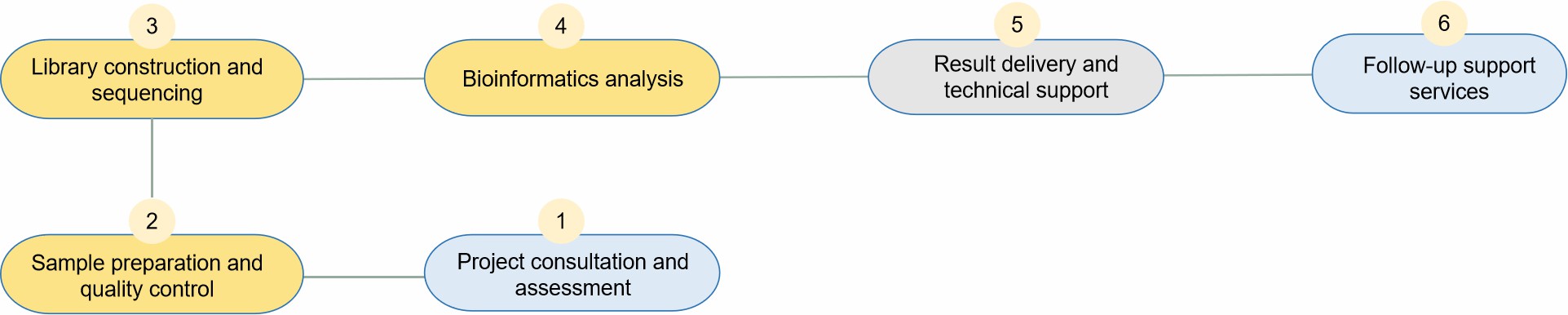
  • Project consultation and assessment. Understand the client's research objectives and confirm species information and sample conditions.
  • Sample preparation and quality control. Provide guidance on sample collection, complete DNA extraction, and perform quality control.
  • Library construction and sequencing. Use a dual-end library construction strategy to perform sequencing analysis on target samples.
  • Bioinformatics analysis. Complete K-mer analysis, genome parameter assessment, and preliminary assembly.
  • Result delivery and technical support. Provide detailed analysis reports and data files, and interpret key parameters.
  • Follow-up support services. If clients have further needs, we can provide whole-genome sequencing, annotation, comparative analysis, and other services.

Process of testing.Fig.2 Our experimental process. (Lifeasible)

Why Choose Us?

  • High accuracy. We can accurately determine the size of insect genomes, heterozygosity, proportion of repetitive sequences, and ploidy, with clear and easy-to-understand k-mer diagrams.
  • Extensive experience. We have experience in providing services for many types of insects and have completed hundreds of research projects.
  • High quality. From extraction and library construction to bioinformatics analysis, we ensure high-quality results.

Lifeasible is a leader in the field of insect services. The insect genome survey sequencing services we provide offer researchers a foundation for informed decisions in constructing complete genomes and sequencing multiple populations. If you are interested, please feel free to contact us.

For research or industrial raw materials, not for personal medical use!
Services
Online Inquiry