Beyond the Sequence: The Epigenetic Bridge to Phenotypic Plasticity
Plant epigenetic analysis focuses on heritable yet reversible molecular modifications—such as DNA methylation, histone modifications, and chromatin accessibility—that regulate gene expression and developmental plasticity. These epigenetic mechanisms play a central role in plant development, stress responses, transgenerational inheritance, and environmental adaptation.
Lifeasible provides integrated epigenetic profiling services tailored specifically for plant systems, combining advanced sequencing technologies, robust experimental workflows, and specialized bioinformatics pipelines. Our services enable researchers to uncover epigenetic regulatory mechanisms underlying complex plant traits across diverse species and experimental designs.
DNA methylation is one of the most extensively studied epigenetic modifications in plants, occurring primarily at CG, CHG, and CHH contexts (where H = A, T, or C). It plays a critical role in gene regulation, transposon silencing, and genome stability.

Genomic DNA Extraction
Isolate high-quality plant genomic DNA suitable for bisulfite conversion.

Bisulfite Treatment
Convert unmethylated cytosines while preserving methylated cytosines.

Library Preparation & Sequencing
Construct sequencing libraries and perform high-throughput sequencing.

Methylation Calling
Identify methylated cytosines in CG, CHG, and CHH contexts.

Differential Analysis
Compare methylation patterns across samples or conditions.
Histone modifications such as methylation, acetylation, and phosphorylation influence chromatin structure and transcriptional activity. Profiling these modifications provides insight into transcriptional regulation and chromatin states.

Chromatin Crosslinking
Stabilize DNA–histone interactions within plant cells.

Chromatin Fragmentation
Shear chromatin to appropriate fragment sizes.

Immunoprecipitation
Enrich chromatin using modification-specific antibodies.
Library Construction & Sequencing
Prepare enriched DNA for high-throughput sequencing.

Peak Annotation
Identify enriched regions and associate them with genes.
Chromatin accessibility reflects the physical openness of chromatin and determines transcription factor binding potential. Accessible chromatin regions often correspond to promoters, enhancers, and regulatory elements.
Nuclei Isolation
Isolate intact nuclei from fresh or frozen plant tissue.

Accessible Chromatin Tagging
Selectively label or fragment open chromatin regions.

Library Preparation
Generate sequencing libraries from accessible DNA.
Sequencing & Mapping
Map accessible regions across the genome.
Regulatory Element Analysis
Link open chromatin regions to regulatory functions.

Small RNAs and long non-coding RNAs (lncRNAs) play essential roles in epigenetic regulation by guiding DNA methylation, recruiting chromatin-modifying complexes, and establishing transcriptional silencing pathways that control gene expression and transposon activity in plants.
To provide biologically meaningful insights, Lifeasible integrates multiple epigenetic datasets with transcriptomic and genomic data, enabling comprehensive interpretation of regulatory mechanisms and direct linkage between epigenetic states, gene expression dynamics, and metabolic pathway regulation.
This integrative strategy allows seamless internal linking to Plant Transcriptomics Analysis Services and Plant Metabolomics Analysis Services, supporting multi-omics research projects.
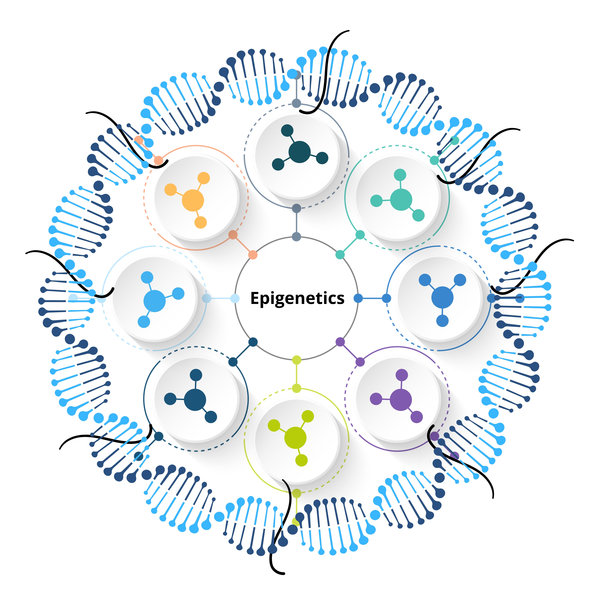
Lifeasible applies a comprehensive suite of cutting-edge, plant-validated epigenetic technologies to accurately detect, quantify, and interpret epigenetic modifications across diverse plant species, tissues, and experimental conditions. Each technology is selected based on genome size, research objectives, and resolution requirements.

WGBS is a high-resolution sequencing technology that profiles DNA methylation across the entire plant genome. It enables unbiased detection of global methylation patterns, epigenetic reprogramming events, and regulatory methylation changes associated with development or stress responses.
RRBS enriches for cytosine-rich genomic regions using restriction enzymes prior to bisulfite sequencing. This technology provides a cost-effective solution for focused methylation profiling of promoters and regulatory elements while maintaining high resolution.
Targeted bisulfite sequencing applies custom primer or probe design to interrogate predefined genomic regions. This technology is ideal for hypothesis-driven studies validating methylation changes in specific genes or regulatory loci across large sample sets.
ChIP-seq is a core technology for profiling histone modifications in plants. By using antibodies specific to modified histone marks (such as H3K4me3 or H3K27me3), ChIP-seq maps chromatin states that regulate gene activation, repression, and developmental plasticity.
ATAC-seq is a powerful technology for assessing chromatin accessibility in plant genomes. By inserting sequencing adapters into open chromatin regions, it identifies regulatory elements such as promoters, enhancers, and stress-responsive loci.
DNase-seq detects open chromatin regions based on sensitivity to DNase I digestion. This technology provides high-resolution maps of regulatory DNA elements and transcription factor binding sites in plant genomes.
sRNA-seq profiles plant small RNAs, including siRNAs and miRNAs, which play central roles in RNA-directed DNA methylation (RdDM). This technology links epigenetic modifications to post-transcriptional gene regulation.
This integrative technology framework combines epigenomic datasets with plant transcriptomics and metabolomics to uncover functional regulatory networks. It enables systems-level interpretation of epigenetic mechanisms underlying complex plant traits.
Each Plant Epigenetic Analysis project follows a structured, quality-controlled workflow:

Project Consultation & Experimental Design

Sample Processing & Quality Control

Library Preparation & Sequencing

Bioinformatics Analysis

Interpretation & Reporting
| Sample Type | Description | Quantity | Storage & Shipping |
| Fresh Plant Tissue | Leaves, roots, stems, or reproductive tissues | ≥ 1 g per replicate | Snap-freeze in liquid nitrogen |
| Frozen Tissue | Flash-frozen plant material | ≥ 1 g per replicate | Ship on dry ice |
| Isolated Nuclei (Optional) | For chromatin-based assays | Project-dependent | Keep frozen |
| DNA Samples (Optional) | High-quality genomic DNA | ≥ 5 μg | −20 °C |
| Replicates | Biological replicates per condition | ≥ 3 recommended | — |
Specific requirements may vary depending on species, tissue type, and assay selection.

Plant-Specific Expertise
Our workflows are specifically optimized for plant systems, addressing challenges such as cell walls, secondary metabolites, and tissue heterogeneity.

Comprehensive Epigenetic Coverage
We offer end-to-end epigenetic profiling, from DNA methylation to chromatin accessibility and regulatory RNA analysis.

Robust Bioinformatics Support
Our bioinformatics pipelines are tailored for plant genomes, including non-model species.

Customized Project Design
Each project is designed around your biological questions, species, and experimental conditions.
Ready to uncover epigenetic regulation in your plant research?
Contact Lifeasible today for a free consultation and a customized epigenetic analysis plan tailored to your research goals.
Plant epigenetic analysis focuses on identifying and interpreting heritable yet reversible molecular modifications that regulate gene expression without changing the DNA sequence itself. These modifications primarily include DNA methylation, histone modifications, chromatin structural changes, and regulatory non-coding RNAs.
Unlike genetic mutations, epigenetic marks provide plants with a dynamic regulatory layer that fine-tunes transcriptional activity in response to developmental cues and environmental signals.
In plants, epigenetic regulation is particularly complex due to unique features such as three cytosine methylation contexts (CG, CHG, and CHH) and extensive interaction with transposable elements. Epigenetic analysis enables researchers to dissect these regulatory layers at single-base or genome-wide resolution.
Plants are sessile organisms and must continuously adjust their gene expression programs to cope with changing environmental conditions such as drought, salinity, temperature fluctuations, nutrient availability, and pathogen pressure. Epigenetic mechanisms allow plants to rapidly reprogram transcriptional states without permanent genetic alterations.
During key developmental processes—such as seed germination, flowering time regulation, organ differentiation, and senescence—epigenetic marks coordinate spatial and temporal gene expression patterns. These regulatory processes are tightly linked to plant transcriptomics, where changes in chromatin state often precede or accompany transcriptional activation or repression.
Certain epigenetic modifications can persist through mitotic and, in some cases, meiotic divisions, leading to transgenerational epigenetic inheritance. This phenomenon contributes to stable phenotypic variation in traits such as stress tolerance, flowering behavior, and yield performance, even in genetically identical plant lines.
Understanding epigenetic inheritance is especially important for crop improvement, clonal propagation systems, and genetically modified plants, where long-term stability of trait expression must be evaluated beyond DNA sequence integrity.
Epigenetic analysis serves as a critical bridge between genotype and phenotype. While plant transcriptomics analysis reveals which genes are expressed and plant metabolomics analysis captures downstream biochemical outcomes, epigenomics explains how transcriptional programs are regulated and maintained.
By integrating epigenetic data with transcriptomic and metabolomic profiles, researchers gain a systems-level understanding of regulatory networks controlling plant growth, stress responses, and metabolic pathway activity.
We support a wide range of plant species, including crops, model plants, trees, medicinal plants, and non-model species.
Yes. Integrated epigenomic and transcriptomic analysis is strongly recommended for functional interpretation.
We recommend at least three biological replicates per condition to ensure statistical robustness.
Absolutely. Epigenetic analysis is particularly powerful for studying plant responses to environmental stress.
Yes. Our services are well-suited for evaluating epigenetic effects associated with genetic modification or genome editing.

Detection of Arabidopsis SNP Genetic Markers

SSR Identification of Cotton Salt Tolerance

RAPD Analysis of Genetic Diversity for Salt Tolerance in Wheat

AFLP Analysis of Genetic Diversity and Genetic Relationships of Spinach Germplasm
 Download
Enter Your Details for Immediate PDF Access
Get Latest Lifeasible News and Updates Directly to Your Inbox


A Supergene for Mirror-Image Flowers in Wachendorfia
July 31, 2026
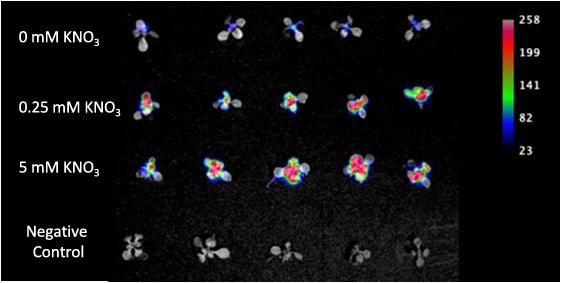
Sentinel Plants Quantify Bioavailable Nitrate
July 24, 2026