Professional, Customizable Beta vulgaris Transformation and Genome Editing Solutions
Beta vulgaris—encompassing sugar beet, red beet, and fodder beet—represents one of the most economically important root crops worldwide, supplying roughly one-third of global sucrose and serving as a critical source of natural betalain pigments and bioactive compounds. Yet despite its agricultural value, B. vulgaris remains notoriously recalcitrant to in vitro regeneration and genetic modification, with transformation success heavily influenced by genotype, explant source, and hormonal regime. At Lifeasible, we have developed a dedicated Beta vulgaris platform that addresses these bottlenecks through genotype-specific protocol optimization, enabling stable transgenic and gene-edited events across diverse breeding lines.
Leveraging deep expertise in precision plant genetic engineering, we bridge the gap from vector concept to stable transgenic line development. Whether your project requires constitutive overexpression of a sucrose-metabolism gene, CRISPR/Cas9 knockout of a Cercospora-susceptibility locus, or multiplex gene editing for regulatory-sensitive applications, our integrated pipeline delivers rigorously characterized material with full molecular traceability.
TARGET GENOTYPES
Elite & Custom Beet Cultivars
Validated diploid and tetraploid lines upon feasibility review.
TYPICAL YIELD
5–10+
Independent T0 Positive Events per construct in optimized genotypes.
EDITING EFFICIENCY
Up to 65%
CRISPR/Cas9 knockout efficiency in diploid backgrounds.
LEAD TIME
4–6 Months
From vector receipt to T0 plantlets; 8–12 months for T1 seed recovery.
Standard Transformation Package
Transgene Integration Focused
CRISPR Knockout & Advanced Editing Package
Full-Service Genome Editing
Stable transformation remains the foundation of modern beet improvement, enabling permanent genomic integration and Mendelian inheritance of novel traits. At Lifeasible, we have optimized the plant transformation workflow specifically for Beta vulgaris to ensure efficient T-DNA integration with a high proportion of low-copy insertion events. While Agrobacterium tumefaciens is our primary vehicle due to its clean integration profile, we maintain alternative delivery strategies for specialized constructs or recalcitrant genotypes.

Explant Preparation
Sterile hypocotyl segments from young seedlings induce competent callus tissue.

Infection & Co-cultivation
Acetosyringone-enhanced Agrobacterium inoculation maximizes T-DNA transfer.

Stringent Selection
Antibiotic selection eliminates non-transgenic tissues, preserving regeneration capacity.

Regeneration
Optimized hormones trigger shoot organogenesis, minimizing somaclonal variation.

Acclimatization
Controlled greenhouse hardening ensures robust T0 plantlet survival.
For projects requiring accelerated proof-of-concept, Lifeasible offers high-throughput transient expression systems in beet that bypass the months-long regeneration cycle. These assays enable rapid validation of promoter activity, subcellular localization, or sgRNA cutting efficiency in days rather than months, providing a critical decision point before committing to stable transformation resources.

Vector Design & Preparation
Optimized vectors and high-purity plasmids for beet delivery.
Target Material Isolation
Viable mesophyll protoplasts or hypocotyl segments prepared for assays.

DNA Delivery
PEG, Agrobacterium, or biolistic delivery for rapid expression.

Incubation & Analysis
Fluorescence imaging, qPCR, or Western blotting quantifies outcomes.
Lifeasible employs a diverse toolkit optimized for Beta vulgaris tissue culture and genetic engineering. We offer multiple DNA delivery methodologies to ensure successful transformation across diverse genotypes and experimental goals.

This is our primary method for generating stable transgenic beet lines. We utilize optimized Agrobacterium tumefaciens strains and virulence-enhancing compounds to infect seedling-derived hypocotyl or cotyledon explants. This approach is preferred for its ability to produce transgenic plants with low copy numbers and stable inheritance, making it ideal for both basic research and commercial breeding pipelines.
For beet genotypes that exhibit low Agrobacterium susceptibility or for delivering large DNA constructs, we employ biolistic delivery. This physical method uses high-velocity gold particles coated with DNA to penetrate the cell wall, delivering genetic material directly into the nucleus. It is a robust alternative that bypasses biological host-pathogen compatibility barriers.
PEG-mediated transformation is a high-efficiency chemical method used to induce direct DNA uptake. At Lifeasible, this technique is predominantly applied to beet protoplasts isolated from young leaves. It serves as an ideal platform for high-throughput CRISPR/Cas9 RNP validation, transient expression studies, and signaling pathway investigations.
For regulatory-sensitive markets, we also offer transgene-free editing by grafting as an emerging approach to introduce heritable edits without stable integration of foreign DNA, providing a pathway toward non-transgenic improved lines.
| Category | Requirements |
| Sample Type | Mature seeds, sterile plantlets, or hypocotyl explants of your beet cultivar |
| Sample Amount | Minimum 100 mature, healthy seeds (approximately 0.5–1.0 g); or 20+ sterile hypocotyl segments |
| Pre-Treatment | Seeds should be clean, free from fungal contamination, and not chemically treated; provide detailed cultivar name and ploidy information |
| Storage Conditions | Store seeds at 4 °C in dry, dark conditions; avoid prolonged storage (>12 months) to maintain viability |
| Shipping | Ship seeds at ambient temperature with desiccant packets; ship sterile plantlets under controlled humidity and temperature |
| Metadata Needed | Cultivar name, genotype, generation/purity, known transformation recalcitrance, target gene/construct details, preferred selection markers |
| Vector Information | Complete plasmid construct map, including promoter, gene of interest, selection marker, and reporter genes; or request Lifeasible vector design services |
Complement your core beet transformation projects with our specialized downstream validation and precision engineering solutions to ensure high-quality research outcomes:
Molecular Characterization & Transgene Validation:
We provide comprehensive analysis to confirm successful integration and expression, including copy-number determination, transcript quantification by RT-qPCR, and reporter gene visualization.
CRISPR/Cas9 Off-Target Screening
To ensure the high precision of genome editing, we utilize advanced amplicon or whole-genome sequencing to identify and analyze potential off-target effects across the Beta vulgaris genome.
Custom Vector Design & Construction
Our team specializes in engineering complex T-DNA vectors, including multi-gene stacking, root-specific promoters, and codon optimization tailored for B. vulgaris.
Subcellular Localization & Imaging
We help visualize your target proteins using fluorescent tagging and high-resolution confocal microscopy to determine precise protein distribution within beet root or leaf cells.
Phenotypic Stress Tolerance Assays
Evaluate the functional impact of your genetic modifications through controlled screening for resistance to abiotic stresses such as drought and salinity, supported by plant stress response profiling.

Strategy & Vector Construction

Explant Induction & Sterile Culture

Transformation & Selection

Regeneration & Hardening

Molecular Characterization

Seed Harvest & Line Advancement
Note: Timelines may vary depending on genotype, ploidy level, and the complexity of the genetic modification.
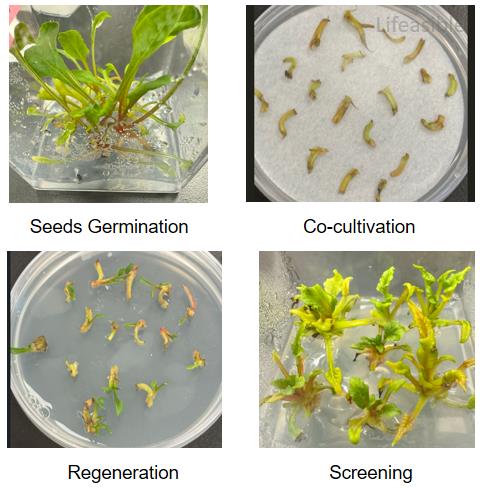
Standardized Agrobacterium-Mediated Transformation of Beta vulgaris
This internal case study illustrates the complete Agrobacterium-mediated transformation workflow for Beta vulgaris. The process begins with sterile seed germination to generate axenic donor seedlings, followed by careful explant isolation and co-cultivation under controlled conditions. Subsequent stages include callus induction and shoot regeneration on optimized hormone-supplemented media, culminating in stringent screening to select transformed tissues and eliminate non-transformed cells. The standardized pipeline consistently delivers healthy, vigorously growing T0 plantlets ready for molecular confirmation. This case demonstrates Lifeasible's robust tissue-culture competence and reproducible transformation efficiency specifically tailored for recalcitrant beet genotypes.
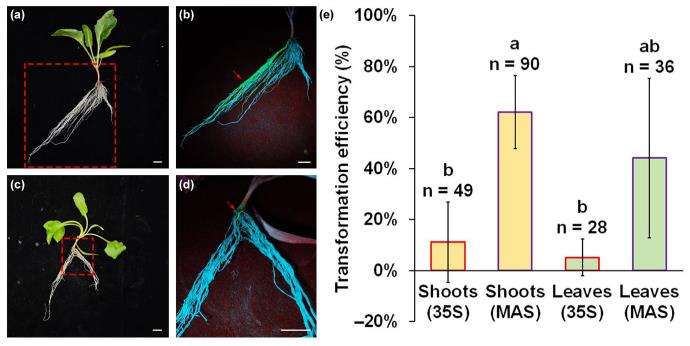
Agrobacterium rhizogenes-Mediated Composite Sugar Beet Transformation
Recent research establishes Agrobacterium rhizogenes-mediated transformation as a high-efficiency, tissue-culture-free platform for sugar beet functional genomics. By simply dipping hypocotyl wounds onto bacterial colonies of strain K599, investigators achieved over 80% adventitious root induction and transformation efficiencies exceeding 60% in the commercial cultivar KWS9147. Critically, substituting the conventional CaMV35S promoter with the MAS promoter dramatically expanded transgene expression from the root tip throughout the entire root system. Molecular validation via qRT-PCR and Western blot confirmed robust expression of introduced genes, while three-month tracking demonstrated stable eGFP fluorescence in thickened adventitious roots. This approach provides a powerful tool for dissecting taproot development, sugar metabolism, and root-pathogen interactions without the bottlenecks of traditional tissue culture.
Our commitment to precision and reliability has made Lifeasible a partner for academic and industrial researchers worldwide. Below are representative feedback from recent collaborations:
"Lifeasible's Agrobacterium-mediated protocol for our diploid sugar beet lines yielded robust T0 events with confirmed single-copy integrations. The root phenotype segregation in T1 matched Mendelian expectations, and their team was exceptionally responsive to our requirements for metabolic pathway studies."
Dr. R. Caldwell
Associate Professor of Crop Physiology
USA
"The PEG-protoplast system delivered usable editing data in 72 hours for the majority of our genome editing targets. Two constructs showed inconsistent results—likely due to promoter compatibility—but the remaining candidates proceeded to stable transformation with confirmed mutations. Turnaround time was essential for our grant deadline."
Dr. M. Fischer
Group Leader, Plant Metabolic Engineering
Germany
"We've commissioned multiple beet transformation projects with Lifeasible since 2022. Their documentation of independent events is consistently thorough, and we recommend budgeting extra time for T2 homozygous line selection—our experience averaged 11 months from vector submission to fixed lines. The quality meets journal submission standards."
Dr. A. Ricci
Senior Researcher
Italy
"Our elite commercial variety failed standard Agrobacterium protocols at another service provider. Lifeasible developed a modified delivery approach over two months, ultimately generating positive T0 lines with stable expression. The extended R&D phase required additional cost discussion, but transparency in troubleshooting was appreciated. Final lines are now in greenhouse trials."
Dr. C. Laurent
Research Director
France
"For routine diploid beet genome editing projects, Lifeasible offers competitive pricing and reliable genotyping. We typically receive sufficient T0 plants per construct, with editing efficiency around 60% in our experience—sufficient for our screening needs. Highly recommended for labs without in-house tissue culture infrastructure."
Dr. J. Whitmore
Lecturer in Plant Molecular Biology
UK

Beet-Specific Expertise
Years of specialized experience in Beta vulgaris transformation, ensuring deep technical knowledge of diploid and tetraploid genotypes, root crop tissue culture, and Chenopodiaceae-specific hormonal responses.

Genotype Versatility
Proven success across standard model lines and adaptation protocols for custom commercial cultivars, including recalcitrant ornamental and industrial varieties.

Technical Precision
Industry-leading editing efficiency utilizing the latest CRISPR/Cas9 technologies tailored for the beet genome, with rigorous off-target screening and mutation validation.

Global Compliance
All beet engineering projects are conducted in state-of-the-art facilities adhering to international biosafety and phytosanitary regulations, with full chain-of-custody documentation.
Are you ready to accelerate your beet research?
Our technical experts are available to discuss your project requirements, from vector design to greenhouse management. From CRISPR-based gene editing to stable transgenic line development, Lifeasible is your trusted partner for every stage of Beta vulgaris genetic engineering.
Beta vulgaris occupies a unique position as both a globally significant industrial crop and an emerging model for root biology and stress physiology research. The species produces a swollen taproot that serves as a massive carbohydrate sink, making it ideal for studying sucrose allocation, vacuolar storage, and source-sink relationships. Decades of breeding have produced extensive transcriptomic resources and well-characterized biosynthetic pathways for betalains, betaine, and fermentable sugars. Among root crops, beet exhibits moderate susceptibility to Agrobacterium tumefaciens, though optimized protocols for plant tissue culture are essential to overcome genotype-dependent recalcitrance and achieve consistent transgenic event recovery.
Successful beet transformation is highly dependent on the interaction between genotype and explant type. Diploid lines are widely regarded as the gold standard due to their robust callus induction and shoot regeneration capacity. Hypocotyl segments and cotyledonary nodes from young, axenic seedlings are the most commonly employed explants, though petiole segments can also be utilized depending on the cultivar. Tetraploid sugar beet varieties often exhibit slower regeneration and may require customized hormonal regimes or extended selection periods. Lifeasible maintains validated starter cultures of standard genotypes and offers pilot feasibility studies for custom cultivars to determine optimal explant sources and antibiotic sensitivity before full-scale project commitment.
Agrobacterium-mediated transformation is widely regarded as the most reliable approach for Beta vulgaris genetic engineering due to its precision and stability. However, beet presents distinct tissue-culture challenges, including high phenolic exudation, rapid oxidation of explants, and genotype-specific regeneration bottlenecks. Compared to model species like Arabidopsis or tobacco, beet requires extended callus induction phases and careful optimization of auxin-to-cytokinin ratios to maintain embryogenic or organogenic potential. At Lifeasible, we address these constraints through proprietary antioxidant supplements, dark-phase co-cultivation, and feeder-layer techniques that enhance T-DNA delivery while preserving explant viability.
Diploid laboratory and breeding lines with strong tissue culture responsiveness are generally the most efficient substrates for both stable transformation and CRISPR genome editing in Beta vulgaris. These genotypes were selected historically for their rapid seed-to-maturity cycle, compact growth habit, and exceptional callus formation capacity. However, we have also optimized protocols for numerous tetraploid sugar beet varieties and table beet cultivars upon request. For elite lines with unknown transformation competence, we strongly recommend initiating a small-scale pilot feasibility study using 50–100 explants to evaluate callus induction rates, antibiotic sensitivity, and regeneration capacity before committing to a full-scale project. This approach minimizes risk and ensures that the selected genotype is compatible with our standard Agrobacterium-mediated pipeline.
At Lifeasible, we define an independent transformation event as a positive T0 plantlet that originates from a distinct, physically separated explant or callus clump, rather than multiple shoots arising from the same transformed cell cluster. This distinction is critical because regenerants from a single transformation event are clonal and do not represent unique genomic integration sites. To verify independence, we document the spatial origin of every explant during the selection phase and, upon request, perform Southern blot analysis or junction-sequence sequencing to confirm that each delivered plant carries a unique T-DNA insertion pattern. This rigorous standard ensures that researchers receive genuinely independent biological replicates suitable for robust statistical analysis and subsequent breeding programs.
Standard transgenic delivery involves the stable integration of a foreign DNA construct—such as an overexpression cassette or RNAi hairpin—into the beet genome, resulting in a plant that inherits the transgene and its associated selection marker across generations. In contrast, our CRISPR knockout service is designed to generate targeted mutations, typically small insertions or deletions, at a specific endogenous locus without necessarily retaining exogenous DNA in the final line. The CRISPR package includes sgRNA design, vector construction, Agrobacterium-mediated delivery, and rigorous mutation screening via amplicon sequencing to identify plants carrying frameshift or precise edits. While both services yield T0 plants, the CRISPR package places greater emphasis on molecular characterization of the edited allele and can be coupled with transgene-free segregation strategies to remove the Cas9 cassette in subsequent generations.
Yes, Lifeasible offers comprehensive generation advancement as an optional upgrade for both transgenic and CRISPR-edited beet lines. Upon request, we will cultivate T0 plantlets to maturity, perform controlled self-pollination or crossing, and harvest T1 seeds. For CRISPR projects, the T1 generation is particularly valuable because it allows segregation analysis to identify plants that have lost the T-DNA cassette while retaining the desired mutation, effectively producing transgene-free edited lines. We can further advance promising T1 individuals to the T2 generation to achieve homozygosity at the edited locus. Throughout this process, we provide detailed genotyping reports, segregation ratio analysis, and preliminary phenotypic observations under controlled greenhouse conditions, giving you publication-ready material without requiring in-house crossing infrastructure.

A Comprehensive Guide to Plant Transformation

CRISPR-Cas9: A Comprehensive Guide to Genome Editing in Plants
Agrobacterium tumefaciens-mediated Tobacco Leaf Disk Transformation
Unlocking the Potential of CRISPR-Cas12a in Plant Genome Editing
Reference
 Download
Enter Your Details for Immediate PDF Access
Get Latest Lifeasible News and Updates Directly to Your Inbox


A Supergene for Mirror-Image Flowers in Wachendorfia
July 31, 2026
Sentinel Plants Quantify Bioavailable Nitrate
July 24, 2026