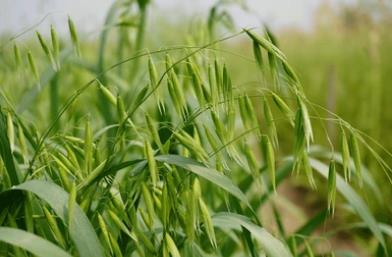
Professional, Customizable Hordeum vulgare Transformation and Genome Editing Solutions
Barley (Hordeum vulgare L.) is one of the world's most widely cultivated cereals, valued for feed, malting, brewing, and food applications. Its diploid genome, self-pollinating habit, and rich germplasm resources have also made it a cornerstone species for cereal genetics and pre-breeding research. At Lifeasible, we have established an Agrobacterium-mediated transformation pipeline built around immature embryo-derived tissues, enabling stable transgenesis and CRISPR-based genome editing in this historically recalcitrant monocot.
Drawing on our plant genetic engineering expertise, we support projects ranging from single-gene overexpression and RNAi silencing to multiplex CRISPR knockout and precision editing, with molecular validation of every delivered event.
TARGET GENOTYPES
Golden Promise & Custom
Reference and malting cultivars; additional genotypes after feasibility evaluation.
TYPICAL YIELD
5–10
Independent T0 positive events per construct in Golden Promise.
EDITING EFFICIENCY
Up to 50%
T0 plants carrying target mutations under optimized CRISPR/Cas9 conditions.
LEAD TIME
4–6 Months
From vector receipt to hardened T0 plantlets; 8–12 months for T1 seed recovery.
Standard Transformation Package
Transgene Integration Focused
CRISPR Knockout & Advanced Editing Package
Full-Service Genome Editing
Stable transformation remains the most reliable route to heritable genetic change in barley, a species in which genotype strongly influences both transformation and regeneration competence. Our workflow is optimized for Hordeum vulgare to deliver well-characterized T0 plants with defined integration or editing outcomes. Learn more about our broader plant genetic transformation capabilities across crop species.
Explant Preparation
Scutella from 10–14 day immature embryos provide highly regenerative target tissue.
Infection & Co-cultivation
Optimized Agrobacterium inoculation delivers T-DNA into embryogenic scutellar cells.
Stringent Selection
Antibiotic selection enriches transformed callus while preserving embryogenic potential.
Regeneration
Hormone-regulated media promote germline-competent shoot and root development.
Acclimatization
Controlled hardening produces vigorous T0 plantlets ready for molecular screening.
For projects that need early data before committing to stable transformation, Lifeasible offers transient expression and editing assays in barley protoplast systems. These approaches deliver construct performance or guide RNA activity data within days, providing a practical decision point ahead of full-scale immature embryo work. Downstream measurements can be combined with our analytical services as needed.
Vector Design & Preparation
Editing or expression constructs prepared for barley protoplast delivery.
Target Material Isolation
Viable protoplasts from young leaf or embryogenic tissues.
DNA Delivery
PEG-mediated uptake or Agrobacterium-based transient expression.
Incubation & Analysis
Reporter imaging, targeted PCR, and sequencing quantify assay outcomes.
Lifeasible applies delivery methods selected for barley tissue culture realities, genotype responsiveness, and construct type. Each approach is integrated into our regeneration pipeline to maximize the recovery of characterized T0 events.
Our primary method for stable barley transformation uses immature embryo scutella co-cultivated with disarmed Agrobacterium strains. This biological delivery route is favored for its tendency to produce simple integration patterns and stable inheritance, and it is fully compatible with CRISPR cassette delivery. Parameters such as inoculum density, co-cultivation conditions, and selection stringency are tuned for each approved genotype.
For genotypes or construct types where Agrobacterium performance is insufficient, we offer biolistic delivery of DNA-coated microparticles into embryogenic tissues. This physical approach bypasses host–strain compatibility limitations and accommodates large or complex constructs, at the cost of generally higher copy-number complexity.
Polyethylene glycol treatment induces DNA uptake in isolated barley protoplasts, supporting rapid transient expression, guide RNA validation, and editing-reagent testing without regeneration. It is a routine companion assay within our stable pipeline rather than a stand-alone delivery route.
Barley stripe mosaic virus vectors enable rapid, sequence-specific transcript knockdown in barley tissues. This method supports preliminary loss-of-function assessment while stable knockout lines are being generated, and can guide prioritization among candidate targets.
| Category | Requirements |
| Sample Type | Mature seeds of your barley cultivar, or pre-approved immature embryo donor plants |
| Sample Amount | Minimum 200 mature, plump, healthy seeds (approximately 8–10 g) |
| Pre-Treatment | Seeds must be clean, untreated with fungicides or insecticides, and accompanied by full cultivar identity |
| Storage Conditions | Store at 4 °C, dry and dark; germination testing recommended after 12 months |
| Shipping | Ambient temperature with desiccant; insulated packaging during extreme heat |
| Metadata Needed | Cultivar name, germplasm source, known transformation history, target gene details, preferred selectable marker |
| Vector Information | Complete construct map (promoter, gene of interest, marker, terminator) or request Lifeasible vector design services |
Extend your barley transformation project with specialized downstream capabilities that shorten line development and deepen molecular and phenotypic characterization:
CRISPR Guide RNA Design and Off-Target Assessment
Our bioinformatics team designs high-activity sgRNAs against barley reference genomes, evaluates potential off-target sites, and ranks candidates to maximize on-target cutting while minimizing unintended edits.
Homozygous Line Development and Segregation Analysis
We grow selected T0 plants to flowering, perform controlled self-pollination, genotype T1 progeny by amplicon sequencing, and identify homozygous, bi-allelic, or transgene-free lines for your research.
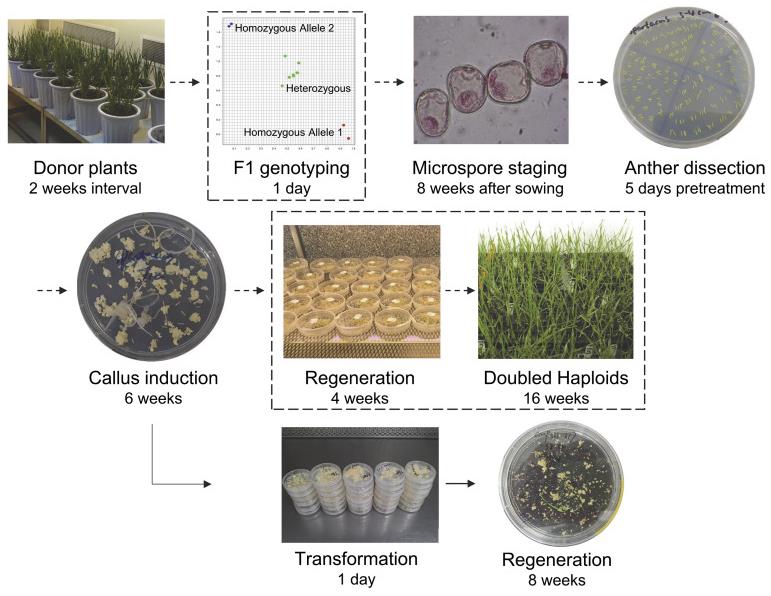
Barley Doubled Haploid Production via Microspore Culture
Through microspore culture and doubled haploid production, edited alleles are fixed instantly in a homozygous background, accelerating the evaluation of knockout phenotypes across generations.
Controlled-Environment Phenotyping of Edited Lines
Edited and control lines are evaluated under controlled greenhouse or growth-chamber conditions for agronomic, developmental, and stress-related traits, with imaging and measurements tailored to your hypotheses.
Vector Engineering and Multiplex Editing Construct Assembly
We assemble single or multiplex CRISPR constructs with appropriate promoters, selectable markers, and regulatory elements, optimizing cassette architecture for reliable expression in barley cells.
Strategy & Vector Construction
Donor Plant Growth & Explant Preparation
Transformation & Selection
Regeneration & Rooting
Molecular Characterization
T0 Maturation & T1 Seed Production
Note: Timelines vary with genotype responsiveness, seasonal donor plant performance, and project scope.
Genotype-Independent Barley Gene Editing via Anther Culture-Derived Callus
Conventional barley transformation relies on immature embryos of Golden Promise, restricting editing of commercial varieties. Researchers developed an anther culture-based platform in which microspore-derived embryogenic calli serve as receptors for Agrobacterium-mediated CRISPR/Cas9 delivery. Tested across Golden Promise and four Australian commercial varieties, the system produced T0 plants with an average mutation rate of 53% across targets, and 69% of edits were single-base indels or two-base deletions typical of frameshift knockouts. The protocol delivers higher regenerant throughput than standard methods within a comparable timeframe, and the doubled haploid step can fix mutations and segregate out the T-DNA backbone early, accelerating recovery of transgene-free homozygous edited lines.
Our commitment to precision and reliability has made Lifeasible a partner for academic and industrial researchers worldwide. Below are representative feedback from recent collaborations:
"Their Golden Promise pipeline delivered exactly the independent events promised. Genotyping documentation was publication-ready, and communication at each milestone kept our team aligned without micromanagement."
Dr. R. Calloway
Principal Scientist
USA
"We had struggled with barley regeneration in-house. The team's troubleshooting reports were transparent about optimization steps, and the final T0 plants arrived healthy with clean sequencing data and clear mutation annotations."
Dr. A. Whitfield
Assistant Professor
USA
"Multiplex knockout of a small gene family was handled competently. Amplicon sequencing identified the allele combinations we needed, and segregation data in T1 matched expectations. A dependable partner for cereal editing."
Dr. H. Brennan
Senior Lecturer
UK
"Professional project management from construct design through T1 seed harvest. The feasibility assessment before contract signing was honest about timelines for our cultivar, which we greatly appreciated."
Dr. M. Richter
Research Group Leader
Germany
"Editing efficiency exceeded what our consortium typically achieves in wheat. Report formatting suited our regulatory dossier needs, and the transgene-free line selection service saved us at least a year."
Dr. P. Lambert
Research Director
France
"Responsive scientists, realistic timelines, and plants that matched the agreed specifications. Their molecular validation reports required no additional formatting before journal submission, which streamlined our publication workflow considerably."
Dr. G. Ferraro
Associate Researcher
Italy
Cereal Transformation Focus
Deep, accumulated experience with monocot tissue culture, addressing the regeneration constraints that limit most in-house barley programs.
Genotype-Specific Optimization
Honest feasibility evaluation for Golden Promise, Morex, and customer cultivars before contract signature.
Editing Rigour
Systematic mutation identification, allele zygosity reporting, and segregation tracking from T0 through T1/T2.
Compliance and Traceability
Projects handled under controlled greenhouse and laboratory conditions with complete documentation of material chain-of-custody.
Ready to move your barley research forward?
From CRISPR-based gene knockout to stable transgenic line development and generation advancement, Lifeasible supports every stage of Hordeum vulgare genetic engineering. Share your target gene and cultivar information, and our technical team will respond with a tailored project proposal.
Barley (Hordeum vulgare L.) ranks among the most widely grown cereals on earth, serving global feed, malting, brewing, and food markets. From a research perspective, it offers an unusually favorable combination of traits: a diploid genome with extensive genomic resources, true self-pollination that simplifies fixation of edited alleles, and a large, well-characterized germplasm pool spanning two- and six-rowed, hulled and hulless, and winter and spring growth habits. Barley transformation has historically lagged behind tobacco or Arabidopsis, but decades of protocol refinement — centered on immature embryo explants and Agrobacterium-mediated delivery — now make it a practical platform for functional genomics and trait validation. Lifeasible's service builds on this established foundation to deliver edited and transgenic barley material with defined molecular outcomes.
Transformation competence in barley is strongly genotype-dependent, and no protocol performs identically across cultivars. Golden Promise, a semi-dwarf malting barley originally selected in Scotland, is the community's reference transformation genotype because of its dependable callus induction and regeneration from immature embryo scutella. Morex, the North American malting standard and reference genome donor, is also used in many editing programs. Elite breeding lines and regional cultivars often regenerate poorly without adjustment of media composition, hormone balance, and selection pressure — which is why Lifeasible evaluates each customer cultivar through a structured feasibility assessment before quoting a full project. This approach protects clients from committing resources to genotypes that cannot yet support efficient transformation, and it shapes realistic expectations for event yield and timeline.
The immature embryo — typically harvested ten to fourteen days after pollination — is the explant of choice for barley transformation because its scutellar tissue forms highly embryogenic callus that regenerates fertile plants at workable frequencies. Regeneration, not DNA delivery, is the principal bottleneck in barley genome editing: efficient T-DNA transfer is of little value if transformed cells cannot be coaxed through somatic embryogenesis. Protocol success therefore depends on precise staging of embryo development, donor plant health, and carefully sequenced selection that eliminates untransformed tissue without killing embryogenic sectors. These requirements also explain why barley transformation cannot be reduced to short, fixed turnaround promises. Lifeasible manages donor plant production year-round and tracks each resistant callus as an independent lineage, which is essential for delivering genuinely independent T0 events rather than clonal duplicates.
Barley genome editing has progressed from first proof-of-concept knockouts to increasingly sophisticated trait engineering. Community-validated targets include Vrs1, whose disruption converts two-rowed to six-rowed spike architecture, and Nud1, whose loss produces hulless grain — both classical gene-to-phenotype examples that remain workhorse demonstrations of editing pipelines. Susceptibility gene knockouts such as Mlo alleles provide durable powdery mildew resistance, while editing of dormancy and lipid metabolism genes addresses grain quality and feed energy density. In 2026, a gene-edited barley with small indels in two lipase genes became the first crop to receive a UK Precision Bred Organism marketing notice, signaling a maturing regulatory pathway for edited cereal material. These milestones underline why transformation capacity — the ability to regenerate edited plants at all — remains the enabling bottleneck that service providers must solve first.

We maintain validated protocols for Golden Promise and Morex and can evaluate additional cultivars upon request. Because regeneration competence varies substantially between genotypes, cultivars without an established track record enter a feasibility assessment — typically including germination testing, callus induction trials, and selection sensitivity checks — before we commit to a full project. This protects you from paying for a transformation campaign on material that may not yet respond to published conditions. If you plan to edit an elite breeding line, please share its identity and any available tissue-culture history at the inquiry stage so we can scope the evaluation correctly.
Immature embryos at roughly ten to fourteen days after pollination provide scutellar tissue with the strongest embryogenic response in barley. This means donor plants must be grown and staged under controlled conditions, which is one reason stable barley transformation is measured in months rather than weeks. We operate donor plant production year-round to avoid seasonal delays, but clients should still budget for donor plant growth time within the overall timeline. Mature embryos or alternative explants can be explored for specific genotypes, though regeneration frequencies are generally less favorable and may affect the quoted event yield.
Candidate T0 plants are screened by PCR amplification across the target site, followed by sequencing of the amplicon to identify insertions or deletions. Each mutation is annotated by type (in-frame or frameshift) and classified by zygosity where the sequence data permit — homozygous, bi-allelic, or chimeric. Because early-generation barley plants can be mosaic, we treat chimeric candidates conservatively and prioritize clearly resolved alleles for advancement. Where copy-number or integration context matters, we can add Southern-based analysis through our molecular characterization workflows before lines move to T1.
We define success criteria in the project agreement before work begins, including the minimum number of independent events. If a construct fails to produce events in Golden Promise under our standard conditions, we first troubleshoot delivery and construct factors — guide efficiency, cassette design, or selectable marker compatibility — and discuss options with you before any rework is billed. For customer cultivars, feasibility results may indicate that the genotype itself limits recovery; in that case we report the data transparently and propose alternatives, such as switching the editing background to a reference genotype followed by introgression, rather than repeating an unpromising cycle.
Yes, as optional generation-advancement services. Selected T0 plants are grown to flowering and self-pollinated under bagging, and T1 progeny are genotyped to identify individuals homozygous for the desired edit. Because the CRISPR cassette is typically delivered on a T-DNA, segregation in T1 also makes it possible to identify plants that retain the target mutation but have lost the transgene — the transgene-free outcome many regulated-market or publication-driven projects require. Achieving this adds one generation to the timeline, which we factor into the proposal from the start.
Multiplex editing is supported through constructs carrying multiple guide RNAs, which we design with attention to guide spacing and construct stability. This approach is particularly useful for gene families and duplicated loci common in the barley genome, where single-guide knockout would leave functional paralogs. Multiplex projects receive expanded amplicon-based screening across all target sites, and we report allele combinations per event so you can select the genotype that matches your hypothesis. Multiplex designs may carry somewhat lower per-site efficiency, which we discuss candidly during construct design.
At minimum, we need the cultivar identity and approximately 200 healthy mature seeds for donor plant production — or pre-approved immature embryo donor plants for time-critical work. For the genetic material itself, you may supply a completed binary vector or commission our vector design service; either way, we require the full construct map including promoter, selectable marker, and terminator elements. For editing projects, please provide the target gene identifier or sequence and any allele-specific information. All materials and information supplied are handled under our standard confidentiality terms.

CRISPR-Cas9: A Comprehensive Guide to Genome Editing in Plants

Unlocking the Basics: What is Genetic Transformation and Why It Matters

Unlocking the Potential of CRISPR-Cas12a in Plant Genome Editing

The Power of Molecular Breeding in Crop Improvement
Reference