Professional, Customizable Alfalfa Transformation and Genome Editing Solutions
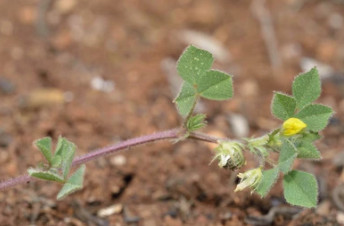
Medicago sativa L. — alfalfa, or lucerne — is the world’s most widely cultivated forage legume, valued for its high protein content, nitrogen-fixing root nodules, and exceptional yield persistence. It is also one of the most genetically complex crops handled in the laboratory: cultivated alfalfa is an autotetraploid (2n = 4x = 32) and an outcrossing species, which means a single target gene may exist as several distinct alleles and every plant is highly heterozygous. At Lifeasible, our alfalfa pipeline is built around this biology — a validated Regen transformation system, somatic embryogenesis-based regeneration, and allele-aware CRISPR/Cas9 strategies — so that researchers working on forage quality, stress tolerance, or functional genomics receive plant materials that match the realities of tetraploid genetics.
From binary vector construction to T0 delivery and mutation characterization, our gene knockout services with CRISPR/Cas9 are integrated with the transformation workflow itself, giving you one accountable partner from target design to edited plants.
ROUTINE GENOTYPE
Regen
Validated; custom cultivars via feasibility review.
TYPICAL YIELD
10+
Independent T0 events per construct.
GENOME EDITING
Multiplex CRISPR
Cas9-based, multi-allelic knockout with allele-level analysis.
LEAD TIME
5–7 Months
To T0 plantlets; T1 seed via crossing adds 4–6 months.
Standard Transformation Package
Transgene Integration Focused
CRISPR Knockout & Multiplex Editing Package
Full-Service Genome Editing
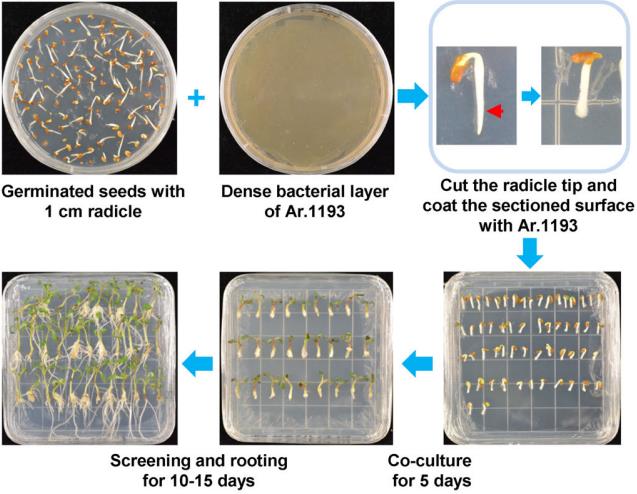
Stable transformation in alfalfa is anchored in its capacity for somatic embryogenesis — a process in which leaf-derived cells re-enter the embryogenic program and regenerate whole plants. Lifeasible has optimized this plant tissue culture-based workflow specifically for the highly regenerable Regen genotype, delivering well-documented, greenhouse-acclimatized T0 plantlets with predictable timelines.
![]()
Explant Establishment
Sterile leaf explants from Regen stock plants initiate embryogenic callus.
![]()
Infection & Co-cultivation
Acetosyringone-enhanced Agrobacterium inoculation promotes efficient T-DNA transfer.
![]()
Selection & Embryogenesis
Antibiotic selection enriches transgenic somatic embryos.
![]()
Regeneration & Hardening
Matured embryos convert into rooted plantlets for greenhouse acclimatization.
![]()
Molecular Confirmation
PCR and sequencing verify integration and construct integrity.
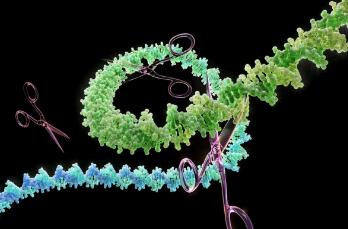
Knocking out a gene in tetraploid alfalfa is fundamentally different from doing so in a diploid model. Because four homologous copies may carry non-identical sequences — and because alfalfa regenerates through embryogenic callus that can retain chimeric cell layers — a generic single-sgRNA design frequently edits only a subset of alleles. Our editing service is built around this problem, following the principle of plant genetic modification by CRISPR/Cas9 adapted to polyploid targets.
![]()
Allele-Aware sgRNA Design
gRNAs target conserved regions across homologous alleles.
![]()
Multiplex Vector Assembly
Polycistronic cassettes enable simultaneous multi-site editing.
![]()
Transformation & Selection
The validated Regen pipeline delivers edited embryogenic callus.
![]()
Regeneration
Edited somatic embryos regenerate into intact T0 plantlets.
![]()
Allele-Level Genotyping
Deep sequencing quantifies mutation dosage per allele.
Lifeasible applies a method portfolio matched to alfalfa’s tissue culture behavior, offering multiple DNA delivery routes to accommodate different genotypes and project goals.
Disarmed Agrobacterium tumefaciens strains are used to transfer T-DNA into leaf-derived explants of the Regen genotype. This biological route remains our default because it typically produces simpler integration patterns, lower copy numbers, and more stable transgene expression than physical delivery — important in a crop where silencing-prone complex inserts are costly to characterize in a tetraploid background.
Isolated alfalfa protoplasts are transfected with plasmid DNA or CRISPR ribonucleoproteins using PEG-calcium treatment. This rapid system, enabled by our protoplast regeneration and transformation expertise, serves as a screening stage for construct performance and sgRNA cutting efficiency before full-scale stable work begins.
For genotypes or constructs that respond poorly to Agrobacterium, DNA-coated microprojectiles provide a genotype-independent physical alternative, capable of delivering large or complex cassettes directly into embryogenic tissues.
Where the end goal is edited plants with minimal foreign DNA, we scope DNA-free genome editing approaches using pre-assembled Cas9–guide complexes, applied where tissue culture performance allows recovery of edited regenerants.
| Category | Requirements |
| Sample Type | Scarified mature seeds, sterile seedlings, or fresh leaf/stem material of your alfalfa cultivar |
| Sample Amount | Minimum 150–200 viable seeds (approximately 1–2 g); or 30+ sterile leaf explants |
| Pre-Treatment | Note that alfalfa seeds possess a hard coat; please scarify or indicate if mechanical scarification is required, and confirm seeds are untreated and contamination-free |
| Storage Conditions | Store seeds cool and dry; maintain high viability, as regeneration protocols are sensitive to seed vigor |
| Shipping | Ship seeds at ambient temperature with desiccant; ship sterile plantlets or explants under controlled humidity |
| Metadata Needed | Cultivar name, verified ploidy level, known regeneration history or recalcitrance, and — for editing projects — available sequence information for all alleles of the target locus |
| Vector Information | Complete construct map with promoter, gene of interest, selection marker, and reporter; or request Lifeasible vector design services |
Complement your core alfalfa transformation project with specialized downstream validation and precision engineering solutions tailored to tetraploid genetics and forage research:
Allele-Level Mutation Analysis
We quantify on-target mutations across homologous alleles by deep amplicon sequencing, complemented by RT-qPCR to confirm knockout effects at the transcript level in regenerated T0 plantlets.
Off-Target Screening and Line Cleanup
Potential off-target sites are screened by targeted amplicon sequencing, and Cas9-free edited lines can be recovered through controlled crossing and generational advancement under greenhouse conditions.
Forage Quality Biochemical Profiling
Lignin content, fiber fractions, and key metabolites are profiled to link genotypes to forage quality, supporting digestibility claims with reproducible forage metabolomic analysis data from edited materials.
Custom Multiplex Vector Design
Polycistronic multi-gRNA cassettes, selectable markers, and codon-optimized Cas9 architectures are designed for tetraploid targets, maximizing simultaneous coverage of divergent homologous alleles.
Stress and Disease Phenotyping
Edited lines are challenged under controlled salinity, drought, or pathogen exposure, with plant stress response indicators recorded to prioritize candidates for downstream breeding evaluation.
Strategy & Vector Construction
Explant Establishment & Callus Induction
Transformation & Selection
Somatic Embryogenesis & Regeneration
Molecular Characterization
Crossing & Seed Production
Note: Alfalfa’s regeneration cycle is inherently longer than that of model species; timelines vary with genotype, target complexity, and greenhouse conditions.

Multiplex CRISPR/Cas9 Editing in Alfalfa Using Endogenous U6 Promoters and Visual Reporters
Recent work demonstrates a markedly improved CRISPR/Cas9 multiplex editing toolkit purpose-built for autotetraploid alfalfa. Researchers systematically identified highly active endogenous MsU6 promoters and assembled tandemly arrayed polycistronic tRNA–sgRNA cassettes capable of simultaneously editing up to four genes. Coupled with the RUBY and RH1 visual reporters, the system enabled color-based screening of edited events and raised average per-target editing efficiency by roughly 2.4–2.7 fold. Applied to the stable transformation of the Zhongmu No. 1 cultivar, the multiplex construct yielded regenerated shoots with up to seven target sites edited simultaneously, validating a streamlined route from rapid sgRNA validation to edited alfalfa plants.
Our commitment to precision and reliability has made Lifeasible a partner for academic and industrial researchers worldwide. Below are representative feedback from recent collaborations:
"Lifeasible handled our alfalfa work with impressive rigor. Communication was clear at every stage, and the final documentation met the standards required for peer-reviewed publication. We would not hesitate to use their platform again."
Dr. M. Caldwell
Professor of Forage Science
USA
"As a lab without tissue culture infrastructure, we rely on partners who genuinely understand tetraploid legumes. Their team explained allele complexity honestly and delivered exactly what was agreed. The depth of their Regen regeneration expertise is evident."
Dr. A. Whitfield
Plant Molecular Biologist
USA
"We appreciated the scientific quality of the project discussions. Rather than overselling editing outcomes, their scientists laid out realistic scenarios for multi-allelic knockout and proposed sensible validation strategies. Professional from inquiry to delivery."
Dr. H. Brandt
Group Leader
Germany
"The regenerated plantlets arrived in excellent condition, well acclimatized and accompanied by complete culture records. Follow-up support on genotyping interpretation was prompt and thorough. A dependable partner for forage legume research."
Dr. P. Garnier
Senior Researcher
France
"Working with an autotetraploid outcrosser is never simple, yet milestones were transparent and on schedule. Their reporting on mutation screening was detailed enough for us to plan downstream crossing work with confidence."
Dr. G. Ferraro
Assistant Professor
Italy
"Quoting was transparent, timelines were honest, and the deliverables matched the agreement precisely. Their practical knowledge of alfalfa somatic embryogenesis saved us considerable time compared with building this capacity in-house."
Dr. J. Hollingsworth
Lecturer in Crop Genetics
UK
Tetraploid Editing Expertise
sgRNA design and mutation analysis built for four-allele genetics, not adapted from diploid protocols.
Validated Regen Pipeline
A documented, highly regenerable genotype that turns alfalfa from a recalcitrant species into a schedulable service.
Allele-Resolved Reporting
Mutation outcomes expressed as allele dosage, giving you decision-grade data rather than presence/absence calls.
End-to-End Accountability
Vector design, transformation, genotyping, crossing, and phenotyping under one project management structure.
Ready to move your alfalfa research from sequence to plant?
Whether you need reliable Regen transformation, multi-allelic knockout of a forage quality gene, or edited germplasm prepared for crossing, our scientists are available to scope feasibility, timelines, and deliverables with you.
Cultivated alfalfa carries 2n = 4x = 32 chromosomes: four homologous copies of every chromosome, and therefore as many as four distinct alleles at any given locus. Combined with its biology as an outcrossing, partially self-incompatible species, this produces individuals that are highly heterozygous and often carry meaningful sequence divergence between homologous copies of the same gene — a phenomenon confirmed in recent genome editing studies, where individual alleles within one plant responded differently to the same guide RNA. The practical consequences reach every stage of a transformation project. Knockout strategies must assume target sequence variation; genotyping must estimate mutation dosage rather than simply detecting a band; and “homozygosity” is replaced by the concept of allele composition. On the other hand, tetraploidy is also why alfalfa tolerates wide hybridization and why edited, clonally propagated germplasm is so valuable to breeding programs.
Alfalfa regeneration is profoundly genotype-dependent, and this bottleneck — not DNA delivery — has historically been the limiting step in alfalfa biotechnology. The Regen genotype family was developed specifically to overcome it: leaf explants from Regen plants form embryogenic callus at high frequency, and the resulting somatic embryos mature and convert into plants far more reliably than those from agronomic cultivars. This is the rationale behind USDA and academic groups standardizing on Regen-derived materials, and behind Lifeasible’s routine use of this genotype for client projects. Notably, recent research has begun extending regeneration and transformation to elite cultivars — for example through stem explants and improved browning control — but such protocols remain cultivar-by-cultivar development efforts. For custom genotypes, a small feasibility study to assess callus induction and embryo conversion is therefore a prudent first step before any full-scale commitment.
Since the first reports of transgenic alfalfa, Agrobacterium tumefaciens-mediated transformation of leaf explants has remained the dominant delivery method, and for good reason. The route transfers defined T-DNA borders with typically low copy numbers, reducing the risk of transgene silencing and complex rearrangements that are especially tedious to characterize in a polyploid background. The workflow proceeds through seed sterilization and seedling establishment, explant inoculation under virulence-inducing conditions, co-cultivation, antibiotic or herbicide selection of transformed cells, and finally regeneration via somatic embryogenesis — with experienced groups reporting transgenic plants in roughly 15 weeks under optimized conditions. Selection agents commonly include kanamycin, hygromycin, and phosphinothricin. Because alfalfa cannot be practically self-pollinated, seed production from T0 plants requires controlled crossing, which adds a dedicated step that diploid model species do not need.
Alfalfa’s value lies in protein yield and persistence, and the editing targets pursued by the research community reflect this. The lignin pathway — including coumarate 3-hydroxylase and related enzymes — is a primary focus because lignin limits cell-wall digestibility; multiplex CRISPR editing of MsC3H using four guide RNAs produced plants with reduced lignin and demonstrably improved forage quality in recent published work. Senescence regulators such as the NAC-family transcription factors MsNAP1 and MsNAP2 are edited to prolong leaf function, raising biomass and nutritional value while improving salinity tolerance. Beyond quality, targets include drought and salt response, resistance to diseases such as Phytophthora root rot and Verticillium wilt, and traits connected to nodulation and nitrogen fixation. A quantitative-genetics perspective helps connect these molecular targets to the variation that breeders actually select for, making edited germplasm a genuine bridge between laboratory discovery and cultivar improvement.

Yes — but it requires a polyploid-appropriate strategy. We design sgRNA panels against conserved regions shared by the homologous copies of your target, and multiplex constructs co-deliver several guides to raise the probability that multiple alleles are modified in the same plant. Final allele composition (for example 2/4 or 4/4 edited) is confirmed by deep amplicon sequencing, and we report mutation dosage explicitly. Complete four-allele knockout is achievable for many targets, but depends on allele sequence variation, cutting efficiency, and regeneration outcomes — we assess this candidly during project scoping.
Our validated routine system uses the Regen genotype, selected for its strong and reproducible somatic embryogenesis. Custom cultivars, including breeding lines and elite germplasm, are accepted subject to a feasibility assessment, because regeneration capacity varies widely between genetic backgrounds. For such projects we recommend starting with a pilot phase to quantify callus induction, selection response, and embryo conversion before committing to full-scale transformation.
Yes, in principle. Please provide seeds or sterile plantlets along with cultivar identity, verified ploidy, and any known regeneration history. We will first establish axenic cultures and run a regeneration feasibility trial. If the cultivar proves recalcitrant, we will report this honestly and can discuss alternatives — for instance, performing editing in Regen and introducing the trait into your background through crossing.
Candidate plants are screened by PCR across the target region, followed by deep amplicon sequencing of the locus. Because homologous alleles may differ by SNPs, sequencing reads can be phased to estimate how many of the four copies carry mutations and what types (indels, substitutions). We report mutation frequency in the context of 1/4, 2/4, 3/4, and 4/4 allele outcomes, and flag chimeric patterns where regenerated plants derive from more than one edited cell.
We do not promise guaranteed outcomes for any specific allele composition, because results depend on target sequence, guide efficiency, and which cells ultimately regenerate. What we do guarantee is a strategy designed to maximize multi-allelic modification — multiplex guides, sufficient population sizes, and dosage-aware screening — plus honest reporting of what is recovered. Lines with the desired composition can then be fixed and advanced through controlled crossing.
Two biological reasons. First, alfalfa regenerates through somatic embryogenesis, a multi-stage process (callus induction, embryo formation, maturation, conversion) that cannot be compressed without sacrificing quality. Second, alfalfa is an outcrosser: producing T1 seed requires controlled cross-pollination between established plants, whereas self-fertile models produce seed almost automatically. Typical timelines run about 5–7 months to characterized T0 plantlets, with seed production adding several more months.
T0 plants generated through vector-based delivery carry the Cas9/sgRNA cassette in addition to the mutation. Because alfalfa is outcrossing, the cassette can be segregated away through crossing in the T1 generation, allowing recovery of edited plants that no longer contain the transgene — a property many research and pre-breeding programs value. Transgene-free line recovery is offered as a generation-advancement option.

CRISPR-Cas9: A Comprehensive Guide to Genome Editing in Plants

Unlocking the Basics: What is Genetic Transformation and Why It Matters

The Power of Molecular Breeding in Crop Improvement

Unlocking the Potential of CRISPR-Cas12a in Plant Genome Editing
Reference