Specialized Brassica rapa Genetic Engineering Solutions from Vector Design to Validated Edited Lines
Brassica campestris L. is a historic synonym of Brassica rapa L. (turnip rape, field mustard), a diploid A-genome species distinct from the allotetraploid B. napus. Its comparatively simple genome and conserved synteny with Arabidopsis make B. rapa an exceptional model for Brassica functional genomics, oil metabolism, and glucosinolate research. At Lifeasible, we operate a dedicated B. campestris / B. rapa pipeline optimized for genotype-specific recalcitrance, bridging CRISPR/Cas9 platforms and classical transformation to deliver stably inherited events with full molecular traceability.
TARGET GENOTYPES
Turnip rape & Custom
Validated diploid lines and breeder varieties upon feasibility review.
TYPICAL YIELD
5–10+
Independent T0 Positive Events per construct in standard genotypes.
EDITING EFFICIENCY
Up to 60%
CRISPR/Cas9 knockout efficiency in optimized backgrounds.
LEAD TIME
4–6 Months
From vector receipt to T0 plantlets; 6–10 months for T1 seed recovery.
Standard Transformation Package
Transgene Integration Focused
CRISPR Knockout & Advanced Editing Package
Full-Service Genome Editing
Stable plant transformation remains the cornerstone of Brassica campestris improvement, enabling permanent genomic integration and Mendelian inheritance of novel traits. Because diploid A-genome germplasm exhibits pronounced genotype-dependent recalcitrance, Lifeasible has refined species-specific media and hormonal regimes to ensure high-frequency T-DNA integration with robust regeneration across oilseed and vegetable morphotypes.

Explant Selection
Sterile cotyledon or hypocotyl segments from young seedlings.

Infection & Co-cultivation
Acetosyringone-enhanced Agrobacterium inoculation.

Selection & Callus Induction
Antibiotic selection induces transgenic callus formation.

Shoot Regeneration & Rooting
Optimized cytokinin-auxin ratios promote organogenesis.

Acclimatization
Gradual greenhouse hardening ensures robust T0 plant survival.
For researchers requiring precise loss-of-function or targeted modification, our genome editing platform leverages the diploid nature of B. rapa to achieve efficient single-gene and multiplex knockouts. We address Brassica-specific challenges such as residual gene family redundancy through multi-gene targeting strategies, delivering rigorously characterized edited material.

Target Design
sgRNA selection against coding or regulatory sequences.

Vector/RNP Assembly
Cas9-sgRNA plasmid or ribonucleoprotein complex preparation.
Transformation & Selection
Agrobacterium or DNA-free delivery with stringent selection.

Genotyping & Validation
PCR, sequencing, and mutation pattern characterization.
Lifeasible employs a diverse toolkit optimized for Brassica campestris tissue culture and genetic engineering. We offer multiple DNA delivery methodologies to ensure successful transformation across diverse genotypes and experimental goals.

Our primary method for stable transgenic line generation. We utilize optimized Agrobacterium tumefaciens strains and virulence-enhancing compounds to infect seedling-derived explants, producing low-copy integration events ideal for research and breeding.
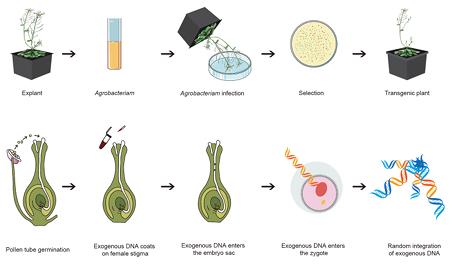
An alternative route bypassing tissue culture bottlenecks. Agrobacterium suspensions are inoculated directly onto pollen followed by manual pollination, with subsequent molecular screening of progeny seeds for transgene integration.
High-efficiency chemical DNA uptake into mesophyll protoplasts. This platform serves as an ideal system for transient CRISPR/Cas9 RNP validation and rapid sgRNA efficiency screening before committing to stable transformation.
For genotypes with low Agrobacterium susceptibility or for delivering large DNA constructs, we employ biolistic delivery. High-velocity particles penetrate cell walls directly, offering a robust physical alternative.
| Category | Requirements |
| Sample Type | Mature seeds, sterile seedlings, or leaf explants of your B. rapa cultivar |
| Sample Amount | Minimum 200 mature seeds (approx. 1–2 g); or 30+ sterile explants |
| Pre-Treatment | Seeds must be clean, viable, and free from fungal contamination; provide exact cultivar name and subspecies |
| Storage Conditions | 4 °C in dry, dark conditions; avoid prolonged storage (>12 months) |
| Shipping | Ambient temperature with desiccant packets; sterile plantlets under controlled humidity |
| Metadata Needed | Cultivar name, subspecies (e.g., oleifera, chinensis), ploidy confirmation, known transformation recalcitrance, target gene details |
| Vector Information | Complete plasmid construct map with promoter, gene of interest, selection marker, and reporter; or request Lifeasible vector design services |
Complement your core Brassica campestris transformation projects with our specialized downstream validation and precision engineering solutions to ensure high-quality research outcomes:
Molecular Characterization & Validation:
Southern blot, RT-qPCR, and reporter visualization to confirm integration and expression patterns.
CRISPR Off-Target Screening
Amplicon or targeted sequencing to identify and analyze potential off-target mutations across the B. rapa genome.
Custom Vector Design
Engineering of complex T-DNA vectors with tissue-specific promoters, multiplex sgRNA cassettes, or codon-optimized Cas9 variants.
CRISPRi & Transient Silencing
Rapid transcriptional repression and gene function screening without permanent genomic alteration.
Genome-scale knockout or activation libraries for population-level screening in B. rapa.
Base Editing & Prime Editing
CBE, ABE, and PE systems for precise base conversion without introducing double-strand breaks.

Strategy & Vector Construction

Explant Induction & Sterile Culture

Transformation & Selection

Regeneration & Hardening

Molecular Characterization

Seed Harvest & Line Advancement
Note: Timelines may vary depending on genotype, construct complexity, and editing strategy.
Agrobacterium-Mediated Transformation of Oilseed Brassica
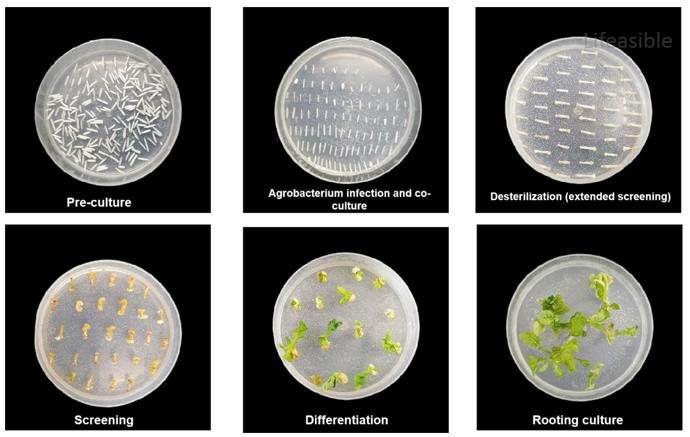
Internal project data demonstrating robust hypocotyl-based transformation in oilseed Brassica species. Using customer-supplied seed stock and binary vectors, we employed an optimized Agrobacterium tumefaciens GV3101 protocol with stringent surface sterilization and co-cultivation conditions. The pipeline delivered 31 independent PCR-positive T0 events from screened explants, with a 78% positive detection rate. Recovered plantlets were successfully acclimatized to field conditions for generational advancement. Subsequent molecular characterization confirmed transgene integration, and protein accumulation was detected in select T1 lines. This case validates our standardized Brassica transformation workflow for stable, heritable trait introduction in oilseed germplasm.
Positive Rate: 78% PCR-confirmed T0 events
Explant: Hypocotyl segments (0.4–0.6 cm)
Strain: Agrobacterium tumefaciens GV3101
Recovery: 31 independent T0 plantlets
Functional Validation of BcGRP20 in Brassica campestris Pollen Development
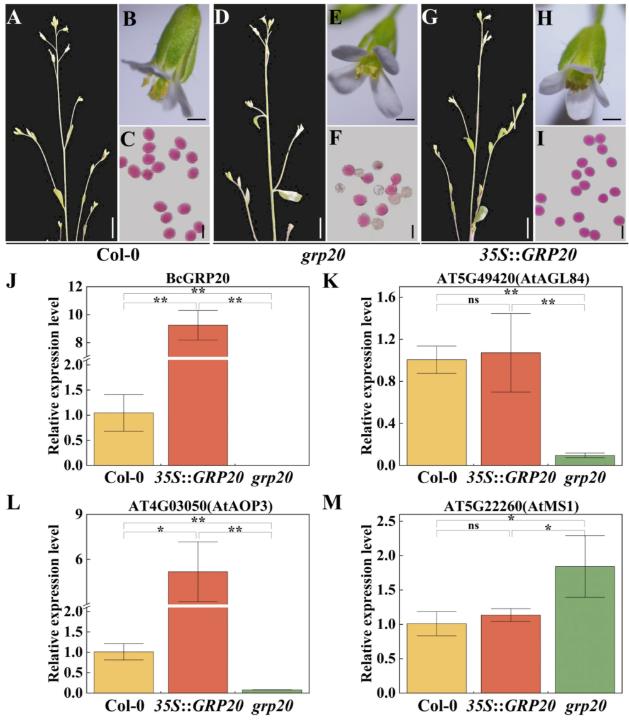
Recent research on Wucai (Brassica campestris L.) elucidates the role of pollen coat proteins in male fertility through integrative genomics and transcriptome-proteome analysis. Investigators identified BcGRP20, a tapetal oleosin localized to the cell membrane, as critical for proper pollen wall formation. To validate its function, researchers constructed the p1305-BcGRP20 expression vector and transformed it into the Arabidopsis grp20 mutant via Agrobacterium-mediated floral dip. Transgenic lines exhibited fully restored pollen fertility, normal anther morphology, and recovered expression of tapetal developmental regulators, demonstrating the conserved function of this Brassica gene and the utility of heterologous transformation for validating crop gene function.
Our commitment to precision and reliability has made Lifeasible a partner for academic and industrial researchers worldwide. Below are representative feedback from recent collaborations:
"Lifeasible's Brassica specialists demonstrated deep knowledge of diploid A-genome tissue culture. The stable T0 delivery was reliable, and their protocols clearly differ from standard polyploid workflows."
Dr. A. Whitmore
Associate Professor
USA
"Their multiplex knockout platform enabled simultaneous targeting of paralogs with rigorous screening. Independent event verification was exceptionally thorough and publication-ready."
Dr. J. Patterson
Principal Investigator
USA
"Transparent timelines and honest feasibility assessments were refreshing. Regeneration efficiency surpassed our in-house capabilities for recalcitrant germplasm."
Dr. H. Brennan
Senior Lecturer
UK
"The DNA-free editing option was executed with remarkable precision. Obtaining transgene-free segregants streamlined our downstream breeding pipeline."
Dr. F. Schäfer
Group Leader
Germany
"Professional handling of non-model genotype feasibility studies impressed us. Viable edited plantlets were delivered within the projected timeline without delays."
Dr. C. Laurent
Research Director
France

Brassica-Specific Expertise
Dedicated protocols for B. rapa diploid genetics, clearly distinguishing our approach from generic B. napus polyploid workflows.

Multiplex Editing Capability
Advanced solutions for gene redundancy through simultaneous multi-gene targeting and high-throughput genotyping.

DNA-Free Pathways
Transgene-free editing options for regulatory-sensitive research and breeding-oriented applications.

End-to-End Integration
Seamless workflow from vector design and transformation through molecular validation and T1 generation advancement.
Are you ready to accelerate your Brassica campestris research?
Our technical experts are available to discuss your project requirements, from vector design to greenhouse management. Whether you need stable transgenic lines for oil metabolism studies or multiplex CRISPR knockouts for gene family analysis, Lifeasible is your partner for every stage of Brassica rapa genetic engineering.
Brassica campestris L. has long been used in agricultural literature to describe turnip rape, field mustard, and related oilseed crops characterized by dark green stems and yellow flowers. However, modern taxonomic authorities including Kew's Plants of the World Online now treat B. campestris as a synonym of Brassica rapa L., with B. rapa designated as the accepted scientific name. This nomenclatural consolidation is critical for both scientific accuracy and digital discoverability, as researchers may query either term when seeking transformation or gene editing services. It is equally important to distinguish B. rapa (diploid, AA genome, 2n=20) from Brassica napus (amphidiploid, AACC genome, 2n=38), the latter being the source of canola and rapeseed oil in many temperate regions. While both species share the A genome inherited from a common ancestor, B. rapa offers a simpler genetic architecture that facilitates functional genomics and targeted editing. Lifeasible therefore structures its service pages to capture both historical and current nomenclature, ensuring clients searching under either name reach the appropriate technical resource.
As a diploid species carrying the A genome, Brassica rapa presents distinct experimental advantages over its allotetraploid relatives. Its genome is comparatively compact and exhibits extensive synteny with Arabidopsis thaliana, enabling straightforward cross-species gene annotation and primer design. For gene knockout studies, the diploid state means that a single frameshift mutation often produces an unambiguous loss-of-function phenotype, whereas polyploid B. napus frequently requires multiplex editing of several homoeologous copies to achieve comparable results. These characteristics make B. rapa an ideal entry point for Brassica functional genomics, particularly for investigations into oil biosynthesis, glucosinolate metabolism, flowering time regulation, and biotic stress responses. Researchers frequently target genes such as PDS3 for visual screening, BnPAP17 for phosphorus-use efficiency, AT114 for fatty acid composition, and BnaGTR for glucosinolate transport. Furthermore, its shorter life cycle and diverse morphotypes—from leafy Chinese cabbage to oilseed turnip rape—provide germplasm options tailored to specific research objectives. Lifeasible's protocols exploit these biological features to maximize editing efficiency and accelerate phenotype validation.
One of the most significant technical hurdles in Brassica rapa genetic engineering is the pronounced genotype dependency of tissue culture regeneration. Unlike model plants such as tobacco or tomato, many B. rapa accessions, particularly winter oilseed types and certain vegetable morphotypes, exhibit strong recalcitrance to Agrobacterium-mediated transformation and subsequent shoot organogenesis. This variability stems from differences in endogenous hormone balances, cell wall composition, and defense responses that influence T-DNA integration and explant dedifferentiation. Consequently, a protocol optimized for one cultivar may fail entirely for another. Lifeasible addresses this challenge by maintaining genotype-specific media formulations, testing multiple Agrobacterium strains for virulence compatibility, and offering pilot feasibility studies for non-model accessions. Understanding and transparently communicating these limitations allows researchers to set realistic expectations and select appropriate germplasm for their specific editing goals.
Although Brassica rapa is diploid, the Brassica lineage experienced a whole-genome triplication event shared among its diploid progenitors, followed by subsequent diploidization. This evolutionary history means that many genes exist as paralogs or members of expanded gene families, potentially masking knockout phenotypes when only a single locus is disrupted. For traits such as disease resistance, stress signaling, or secondary metabolite flux, functional redundancy between paralogs can confound traditional single-gene knockout approaches. Multiplex CRISPR strategies that simultaneously target two or more related genes are therefore essential for revealing true loss-of-function phenotypes in B. rapa. Lifeasible's platform supports multiplex sgRNA cassettes and high-throughput genotyping to identify double, triple, or higher-order mutants, providing researchers with the genetic tools needed to dissect complex trait architecture in this agronomically important species.
Yes. Brassica campestris L. is currently treated as a synonym of Brassica rapa L. by authoritative taxonomic databases such as Kew's Plants of the World Online, which lists B. rapa as the accepted name. The two names have been used interchangeably in historical and regional literature, particularly for turnip rape and field mustard. Because researchers and breeders may search using either term, Lifeasible maintains both names in its service documentation to ensure comprehensive discoverability while adhering to modern nomenclatural standards.
Brassica rapa is a diploid species (AA genome, 2n=20), whereas B. napus is an allotetraploid (AACC genome, 2n=38). The diploid nature of B. rapa simplifies genetic analysis because a single frameshift mutation often yields a clear loss-of-function phenotype without the complication of homoeologous gene copies. This makes B. rapa particularly attractive for functional genomics, validation of gene function, and initial trait discovery before translation into polyploid crop varieties.
We routinely work with oilseed turnip rape, Chinese cabbage types, pak choi, and field mustard accessions. We also accept customer-supplied cultivars, although we strongly recommend a pilot feasibility study for non-model genotypes due to the well-documented genotype dependency of Brassica regeneration. This pilot evaluates callus induction rates, antibiotic sensitivity, and shoot organogenesis capacity before committing to full-scale production.
An independent event is defined as a positive T0 plantlet originating from a distinct, physically separated explant or callus clump, rather than multiple shoots arising from the same transformed cell cluster. We document the spatial origin of every explant during selection. Upon request, we perform junction-sequence sequencing or Southern blot analysis to confirm that each delivered plant carries a unique T-DNA insertion pattern, ensuring genuine biological replicates.
Standard transformation involves the stable integration of a foreign DNA construct into the B. rapa genome, resulting in transgenic plants that inherit the exogenous cassette and its selection marker. Our CRISPR knockout service, by contrast, is designed to generate targeted mutations—typically small insertions or deletions—at specific endogenous loci. The latter package emphasizes molecular characterization of the edited allele, zygosity determination, and can be coupled with transgene-free segregation strategies to remove the Cas9 cassette in subsequent generations.
Yes. We offer comprehensive generation advancement as an optional upgrade. For CRISPR projects, we cultivate T0 plantlets to floral maturity, perform controlled self-pollination, and harvest T1 seeds. Segregation analysis in the T1 generation allows identification of plants that have lost the T-DNA cassette while retaining the desired mutation, effectively producing transgene-free edited lines. We can further advance promising individuals to the T2 generation to achieve homozygosity.
Despite being diploid, B. rapa retains many paralogs from ancestral genome triplication. To address functional redundancy, we design multiplex sgRNA cassettes that simultaneously target two or more homologous genes. Combined with high-throughput genotyping, this approach enables isolation of double or triple mutants, revealing phenotypes that would remain hidden in single-gene knockouts.
From vector receipt to T0 plantlet delivery, the timeline is typically 4–6 months. Advancing to T1 seed harvest and segregation analysis adds an additional 6–10 months. Total duration depends heavily on genotype, explant regeneration speed, and the complexity of the editing strategy. We provide transparent, genotype-specific timeline estimates during project consultation.

CRISPR-Cas9: A Comprehensive Guide to Genome Editing in Plants

What is Genetic Transformation and Why It Matters

Unlocking the Potential of CRISPR-Cas12a in Plant Genome Editing

Understanding GMOs: A Comprehensive Guide to Genetic Modification in Agriculture
Reference
 Download
Enter Your Details for Immediate PDF Access
Get Latest Lifeasible News and Updates Directly to Your Inbox