Professional, Customizable Tomato Transformation and Genome Editing Solutions
Solanum lycopersicum is both a globally essential vegetable crop and a premier model for climacteric fruit biology. Its well-annotated genome, short generation cycle, and established tissue culture protocols make tomato an ideal chassis for metabolic engineering and trait introgression. At Lifeasible, we operate a dedicated tomato plant transformation pipeline that functions year-round, independent of season, to support researchers and breeders in functional genomics, fruit quality improvement, and stress-resistance programs.
Drawing on deep expertise in plant genetic engineering, our services bridge the gap from vector concept to stable transgenic or gene-edited events. Whether your project requires constitutive overexpression of a carotenoid biosynthetic gene, CRISPR/Cas9 knockout of a ripening regulator, or DNA-free editing for regulatory-sensitive applications, our platform delivers rigorously characterized material with full molecular traceability.
TARGET GENOTYPES
Micro-Tom, M82 & Custom
Validated diploid lines and breeder varieties upon feasibility review.
TYPICAL YIELD
10+
Independent T0 Positive Events per construct in standard genotypes.
EDITING EFFICIENCY
Up to 70%
CRISPR/Cas9 knockout efficiency in optimized diploid backgrounds.
LEAD TIME
3–5 Months
From vector receipt to T0 plantlets; 6–9 months for T1 seed recovery.
Standard Transformation Package
Transgene Integration Focused
CRISPR Knockout & Advanced Editing Package
Full-Service Genome Editing
Stable transformation remains the foundation of modern tomato improvement, enabling permanent genomic integration and Mendelian inheritance of novel traits. At Lifeasible, we have optimized the plant transformation workflow specifically for Solanum lycopersicum to ensure high-frequency T-DNA integration with a high proportion of single-copy insertion events. While Agrobacterium tumefaciens is our primary vehicle due to its clean integration profile, we maintain alternative delivery strategies for specialized constructs or recalcitrant genotypes.

Explant Selection
Sterile cotyledon and hypocotyl segments from inbred seedlings.

Infection & Co-cultivation
Acetosyringone-boosted Agrobacterium infection enhances T-DNA delivery.

Stringent Selection
Antibiotic screening eliminates non-transgenic callus and shoots.

Regeneration
Cytokinin-auxin balance drives efficient shoot organogenesis.

Acclimatization
Gradual greenhouse adaptation ensures vigorous T0 plantlet establishment.
For projects requiring accelerated proof-of-concept, Lifeasible offers high-throughput transient expression systems in tomato that bypass the months-long regeneration cycle. These assays enable rapid validation of promoter activity, subcellular localization, or sgRNA cutting efficiency in days rather than months, providing a critical decision point before committing to stable transformation resources.

Vector Design & Preparation
High-fidelity plasmids optimized for Solanaceae delivery.
Target Material Isolation
Fresh mesophyll protoplasts or leaf discs prepared.

DNA Delivery
PEG, Agrobacterium, or biolistic methods enable rapid expression.

Incubation & Analysis
Fluorescence imaging and qPCR quantify transient outcomes.
Lifeasible employs a diverse toolkit optimized for Solanum lycopersicum tissue culture and genetic engineering. We offer multiple DNA delivery methodologies to ensure successful transformation across diverse genotypes and experimental goals.

This is our primary method for generating stable transgenic tomato lines. We utilize optimized Agrobacterium tumefaciens strains—including GV3101, EHA105, LBA288, and AGL-1—and virulence-enhancing compounds to infect seedling-derived cotyledon or hypocotyl explants. This approach is preferred for its ability to produce transgenic plants with low copy numbers and stable inheritance, making it ideal for both basic research and commercial breeding pipelines.
We utilize plant viral vectors to facilitate rapid gene function analysis in tomato. This method is particularly powerful for VIGS and virus-induced gene spreading, allowing researchers to quickly assess loss-of-function phenotypes in floral tissues or seedlings without the extensive timeline required for generating stable mutants.
PEG-mediated transformation is a high-efficiency chemical method used to induce direct DNA uptake. At Lifeasible, this technique is predominantly applied to tomato protoplasts isolated from young leaves. It serves as an ideal platform for high-throughput CRISPR/Cas9 RNP validation, transient expression studies, and signaling pathway investigations.
For tomato genotypes that exhibit low Agrobacterium susceptibility or for delivering large DNA constructs, we employ biolistic delivery. This physical method uses high-velocity gold particles coated with DNA to penetrate the cell wall, delivering genetic material directly into the nucleus or chloroplasts. It is a robust alternative that bypasses biological host-pathogen compatibility barriers.
| Category | Requirements |
| Sample Type | Mature seeds, sterile plantlets, or leaf explants of your tomato cultivar |
| Sample Amount | Minimum 100 mature, healthy seeds (approximately 0.5–1.0 g); or 20+ sterile leaf explants |
| Pre-Treatment | Seeds should be clean, free from fungal contamination, and not chemically treated; provide detailed cultivar name and ploidy information |
| Storage Conditions | Store seeds at 4 °C in dry, dark conditions; avoid prolonged storage (>12 months) to maintain viability |
| Shipping | Ship seeds at ambient temperature with desiccant packets; ship sterile plantlets under controlled humidity and temperature |
| Metadata Needed | Cultivar name, genotype (e.g., Micro-Tom, Moneymaker, M82), generation/purity, known transformation recalcitrance, target gene/construct details, preferred selection markers |
| Vector Information | Complete plasmid construct map, including promoter, gene of interest, selection marker, and reporter genes; or request Lifeasible vector design services |
Complement your core tomato transformation projects with our specialized downstream validation and precision engineering solutions to ensure high-quality research outcomes:
Molecular Characterization & Transgene Validation:
We provide comprehensive analysis to confirm successful integration and expression, including copy-number determination by Southern blot, transcript quantification by RT-qPCR, and reporter gene visualization.
CRISPR/Cas9 Off-Target Screening
To ensure the high precision of genome editing, we utilize advanced amplicon or whole-genome sequencing to identify and analyze potential off-target effects across the tomato genome.
Custom Vector Design & Construction
Our team specializes in engineering complex T-DNA vectors, including multi-gene stacking, fruit-specific promoters, and codon optimization tailored for S. lycopersicum.
Subcellular Localization & Imaging
We help visualize your target proteins using fluorescent tagging and high-resolution confocal microscopy to determine precise protein distribution within tomato floral or fruit cells.
Phenotypic Stress Tolerance Assays
Evaluate the functional impact of your genetic modifications through controlled screening for resistance to abiotic stresses such as drought and salinity or oxidative challenge, supported by comprehensive physiological phenotyping.

Strategy & Vector Construction

Explant Induction & Sterile Culture

Transformation & Selection

Regeneration & Hardening

Molecular Characterization

Seed Harvest & Line Advancement
Note: Timelines may vary depending on genotype, ploidy level, and the complexity of the genetic modification.
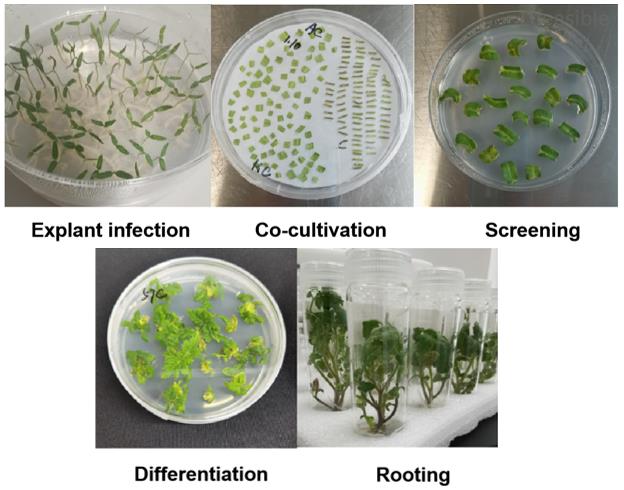
Sweet Protein Expression in Solanum lycopersicum
Internal project data confirming successful Agrobacterium-mediated transformation of tomato using cotyledon and hypocotyl explants. Following co-cultivation with Agrobacterium tumefaciens EHA105, transgenic lines carrying sweet protein expression cassettes were recovered through antibiotic selection, shoot differentiation, and in vitro rooting. Positive T0 plants were validated by PCR genotyping, and the pipeline was advanced to T1 seed harvest for downstream analysis.
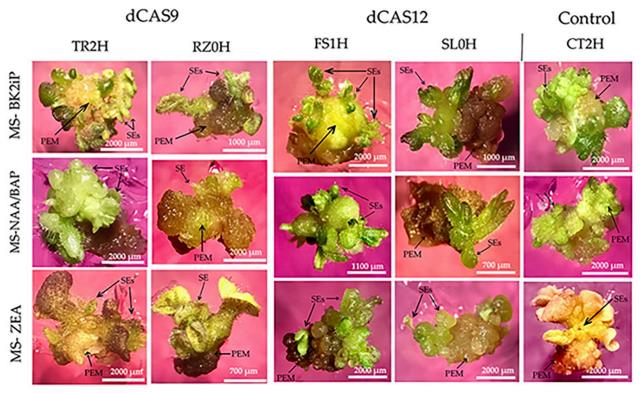
CRISPR-Activation of SlWRKY29 Enhances Somatic Embryogenesis in Tomato
Recent research demonstrates that CRISPR-activation (CRISPRa) can be harnessed to enhance somatic embryogenesis in Solanum lycopersicum cv. Micro-Tom. By fusing dCas9 or dCas12 to a histone methyltransferase SET domain, researchers targeted the promoter of SlWRKY29, establishing a transcriptionally permissive chromatin state enriched with H3K4me3 marks. Cotyledonary explants transformed via biolistics and cultured on cytokinin-rich MS-BK2iP medium produced high frequencies of pro-embryogenic masses and secondary somatic embryos. Transcriptome analysis revealed upregulation of key embryogenic regulators including WUS, LEC1, FUS3, and FIE. This approach offers a powerful strategy to improve regeneration efficiency and accelerate genome editing workflows in tomato.
Our commitment to precision and reliability has made Lifeasible a partner for academic and industrial researchers worldwide. Below are representative feedback from recent collaborations:
"Lifeasible delivered robust T0 lines with clean integration profiles. The molecular documentation was thorough and the turnaround met our grant timeline without issue."
Dr. A. Richardson
Associate Professor of Horticultural Biotechnology
USA
"The protoplast validation system saved months of work. Screening multiple sgRNA targets in parallel allowed us to prioritize only the most promising candidates for stable transformation."
Dr. H. Fischer
Group Leader, Plant Molecular Biology
Germany
"We have relied on their tomato platform for three consecutive years. The consistency of tissue culture performance across different genotypes has been remarkable."
Dr. M. Conti
Senior Researcher
USA
"The transition from T0 to T1 was seamless. Their team provided detailed segregation data and maintained excellent communication throughout the generational advancement."
Dr. J. Whitmore
Principal Investigator, Crop Science
UK
"Excellent expertise in Solanaceae tissue culture. The edited tomato lines arrived with comprehensive genotyping reports that exceeded our internal quality standards."
Dr. P. Laurent
Plant Biotechnologist
USA

Tomato-Specific Expertise
Years of specialized experience in Solanum lycopersicum transformation, ensuring deep technical knowledge of diploid and tetraploid genotypes, fruit tissue culture, and Solanaceae-specific hormonal responses.

Genotype Versatility
Proven success across standard model lines (Micro-Tom, Moneymaker, Ailsa Craig, M82) and adaptation protocols for custom commercial cultivars, including recalcitrant processing varieties.

Technical Precision
Industry-leading editing efficiency utilizing the latest CRISPR/Cas9 and base editing technologies tailored for the tomato genome, with rigorous off-target screening and mutation validation.

Global Compliance
All tomato engineering projects are conducted in state-of-the-art facilities adhering to international biosafety and phytosanitary regulations, with full chain-of-custody documentation.
Are you ready to accelerate your tomato research?
Our technical experts are available to discuss your project requirements, from vector design to greenhouse management. From CRISPR-based gene editing to stable transgenic line development, Lifeasible is your trusted partner for every stage of Solanum lycopersicum genetic engineering.
Solanum lycopersicum is not only one of the world’s most important vegetable crops but also a classic model system for studying fleshy fruit development and ripening. Its short generation time, well-annotated genome, and efficient genetic transformation protocols make it ideal for functional genomics and metabolic engineering. Tomato fruit accumulates high levels of lycopene, β-carotene, GABA, and malic acid, offering well-defined molecular targets for quality improvement. Unlike Arabidopsis, tomato enables research into unique biological processes such as climacteric ripening, flesh softening, color development, and flavor volatile biosynthesis. In recent years, single-base editing platforms and CRISPR knockouts have been successfully applied in tomato to modify fruit size, ripening rate, nutritional quality, and stress tolerance, reinforcing its dual status as both a dicot model organism and an economically vital crop integrated into modern plant breeding pipelines.
Transformation efficiency in tomato is strongly governed by the interaction between genotype and explant type. Model cultivars such as Micro-Tom are preferred for high-throughput screens because of their dwarf habit and rapid life cycle, while Moneymaker and Ailsa Craig are widely used for stable transformation owing to robust regeneration. Processing types such as M82 and fresh-market lines including UC82B and VF36 have also demonstrated good competence under optimized conditions. Explant choice generally focuses on sterile seedling cotyledons and hypocotyls, though cotyledonary nodes or shoot apical meristems are occasionally employed to enhance shoot induction. Genotypes differ significantly in their response to hormone ratios, Agrobacterium strains, and antibiotic pressure, making pilot optimization a critical step for success with non-standard varieties. Our tissue culture competence across this diverse germplasm base ensures that even recalcitrant lines can be addressed through systematic protocol refinement.
Genome editing in tomato has evolved from early RNAi and T-DNA insertion mutants to precise CRISPR-mediated knockouts, base editing, and prime editing. Because tomato is a major horticultural crop, transgene-free editing is attracting increasing attention, particularly in light of tightening regulatory frameworks worldwide. Strategies such as protoplast delivery of pre-assembled RNPs, transient CRISPR expression, and graft-assisted systems enable recovery of edited plants without foreign DNA integration. These approaches are valuable not only for functional gene studies but also for direct improvement of agronomic traits—extending shelf life, boosting lycopene content, and refining sugar-to-acid ratios. Lifeasible integrates the entire workflow from target design to T2 homozygous line validation, offering a true end-to-end tomato genome engineering platform.
Successful Agrobacterium-mediated transformation of tomato is fundamentally governed by the physiological state of the explant and the hormonal environment during tissue culture. Cotyledons and hypocotyls excised from 7- to 10-day-old aseptic seedlings represent the gold-standard explant material, as these tissues harbor actively dividing cells with high dedifferentiation potential and robust responsiveness to cytokinin-driven shoot organogenesis. The auxin-to-cytokinin ratio in the induction medium dictates the developmental trajectory: elevated auxin concentrations promote callus proliferation, whereas a shift toward cytokinin dominance triggers de novo shoot meristem formation. Acetosyringone, a phenolic wound signal, is routinely employed during co-cultivation to induce the vir gene machinery of Agrobacterium tumefaciens, thereby enhancing T-DNA transfer efficiency. As a member of the Solanaceae family, tomato exhibits naturally high susceptibility to Agrobacterium compared to monocot species, though wounding protocols and explant orientation remain critical variables. Precise control of these parameters minimizes oxidative browning, reduces somaclonal variation, and ensures reproducible regeneration of independent transformation events across diverse genotypes.
Tomato genotype is the primary determinant of transformation efficiency. Model cultivars such as Micro-Tom, Moneymaker, and Ailsa Craig possess well-established tissue culture protocols and strong regeneration capacity, typically yielding 10 or more independent T0 positive plants within three to four months. In contrast, commercial processing lines or heirloom landraces may require extended regeneration periods and customized hormonal regimes. For CRISPR/Cas9-mediated modification, protoplast isolation efficiency and DNA repair pathway preferences also vary by genetic background, influencing both mutation rates and off-target potential. We therefore conduct feasibility assessments before project initiation and, when necessary, perform small-scale pilot studies to optimize strain, vector, and selection parameters for each specific cultivar.
For standard transformation projects, the interval from vector confirmation to T0 plantlet acclimatization typically spans three to five months, depending on genotype, selection marker, and regeneration efficiency. After transfer to the greenhouse, T0 plants undergo vegetative growth and flowering; self-pollination or crossing to produce T1 seeds generally requires an additional three to four months. Consequently, the complete cycle from vector delivery to T1 seed harvest usually falls between six and nine months. CRISPR editing projects requiring mutation characterization, segregation of transgene-free lines, or homozygous plant recovery may extend to ten or twelve months. We outline clear milestones at the proposal stage and provide regular progress updates throughout.
Yes. In addition to maintaining in-house stocks of standard model cultivars such as Micro-Tom, M82, and Moneymaker, we accept client-supplied proprietary or heirloom germplasm. For these materials, we first evaluate seed sterility, germination rate, and explant regeneration capacity, then adjust Agrobacterium infection, co-culture, and selection conditions to match the line-specific physiology. It is important to note that certain commercial hybrids or genetically complex accessions may exhibit lower transformation competence. In such cases, we recommend initiating a pilot study to assess feasibility and refine the protocol before committing to full-scale production, thereby minimizing risk and controlling overall project cost.
Transgene-free edited tomato lines are generated primarily through three strategies: direct delivery of pre-assembled Cas9-sgRNA ribonucleoprotein complexes into protoplasts; transient expression of CRISPR plasmids that do not integrate into the genome; or grafting-assisted DNA-free genome editing systems. Once T0 edited plants are recovered, we detect target-site mutations by PCR amplicon sequencing and simultaneously screen for residual Cas9 and selection marker sequences using locus-specific primers. For T1 progeny, segregation analysis confirms the stability of the edit across generations. We provide comprehensive genotyping reports and raw sequencing data to verify that delivered lines meet transgene-free standards.
Cotyledons and hypocotyls from 7- to 10-day-old aseptic seedlings are the preferred explant sources for Agrobacterium-mediated tomato transformation. At this developmental window, cells retain peak dedifferentiation capacity and respond vigorously to cytokinin-driven shoot induction. Cotyledonary segments provide a broad infection surface and produce abundant callus at wound margins, while hypocotyl segments often yield more organized shoot meristems. Older tissues or mature leaf discs exhibit markedly lower competence due to progressive lignification and reduced mitotic activity. We maintain standardized germination schedules for each genotype to ensure explants are harvested at optimal physiological receptivity, thereby maximizing the recovery of independent transformation events and minimizing experimental variability.
Chimerism is a recognized challenge in tomato organogenesis because adventitious shoots can arise from multicellular primordia containing both transformed and non-transformed cells. To address this, we apply stringent antibiotic selection during early regeneration and restrict shoot harvesting to discrete, physically separated callus clusters rather than bulk tissue masses. Each recovered T0 plant undergoes molecular screening of multiple independent leaf samples using locus-specific PCR; for editing projects, amplicon sequencing across the target region is performed on distinct tissue samples. Plants exhibiting uniform mutation patterns or consistent transgene signals across all tested tissues are classified as non-chimeric and advanced for downstream molecular characterization, seed production, or phenotypic analysis.
Stable transgenic lines integrate exogenous DNA cassettes—often including selectable markers and vector backbone sequences—that must be tracked and managed through subsequent generations. In contrast, CRISPR-edited lines may carry only the desired mutation without retaining foreign DNA, particularly when DNA-free ribonucleoprotein delivery or transgene-free segregation strategies are employed. For breeding programs, edited lines frequently offer a streamlined regulatory path in many jurisdictions and eliminate the need for marker-assisted backcrossing to remove transgenes. We provide comprehensive genotyping reports for every delivered line, including zygosity assessment and transgene presence or absence data, enabling clients to select the most appropriate material for either fundamental research or pre-breeding applications.

Extraction and Purification of Rice Genomic DNA

Detection of Genetic Diversity of Rice Parents by RFLP
CRISPR-Cas9: A Comprehensive Guide to Genome Editing in Plants

Understanding GMOs: A Comprehensive Guide to Genetic Modification in Agriculture
Reference
 Download
Enter Your Details for Immediate PDF Access
Get Latest Lifeasible News and Updates Directly to Your Inbox


A Supergene for Mirror-Image Flowers in Wachendorfia
July 31, 2026
Sentinel Plants Quantify Bioavailable Nitrate
July 24, 2026