A Gibberellin Switch for Tunable Male Sterility in Maize
Why Hybrid Seed Production Needs Controllable Male Sterility
Hybrid maize dominates fields because crosses between selected inbred lines can combine hybrid vigor with uniform performance, but producing those hybrids at scale depends on a deceptively simple requirement: the seed parent must not pollinate itself. For decades, systems such as cytoplasmic male sterility and various genic male sterility alleles have supplied that block, yet each comes with trade-offs in stability, restorer complexity, or collateral effects on plant growth. A study in Zea mays now describes a gibberellin-sensitive genic male sterility system in which weak ZmKAO alleles separate male sterility from major vegetative growth defects, presenting breeders with a controllable fertility trait.
The operational reality is that producing hybrid seed still depends heavily on detasseling—physically removing or disabling the tassels of the female parent so it cannot self-pollinate—a step that is labor-intensive, costly, and imperfect. Any system that renders the female parent reliably male-sterile on its own, and does so without sacrificing plant size or seed yield, directly attacks that bottleneck. The ideal is a sterility that is complete enough to prevent selfing, reversible enough to be maintained as a line, and clean enough to leave the rest of agronomy untouched. The weak gibberellin-sensitive alleles described here approach that goal under the tested conditions, consistent with different sensitivities of developmental processes to GA reduction.
Two Alleles That Break Filament Elongation
The work began with two dwarf, male-sterile mutant lines, designated ggms1 and ggms2. At the stage when wild-type anthers should push out of the florets on elongated filaments, the mutants keep their anthers enclosed, and the pollen that remains trapped inside loses viability within about ten days. Critically, the anthers and pollen themselves develop largely on schedule—the failure is specific to the filaments that normally carry the anthers into the open air. Although anther development and female fertility were largely preserved, ggms1 and ggms2 had severe vegetative growth defects. Later-identified weak alleles, ggms3 and ggms4, showed no significant differences in plant height or ear yield from their Z58 control while retaining male sterility. Reciprocal crosses supported nuclear inheritance of the sterility trait. Applying GA3 to tassels restored filament elongation and enabled the mutants to provide functional pollen.
Mapping to Gibberellin Biosynthesis
Both mutants mapped to the same locus on chromosome 9, and the underlying lesion sits in ZmKAO, a gene in the gibberellin biosynthesis pathway. ZmKAO encodes ent-kaurenoic acid oxidase, which catalyzes an early step toward GA12 in gibberellin biosynthesis. The ggms1 deletion and ggms2 splice-site mutation cause premature termination. Measurements in filaments showed reduced GA1 and GA3; GA4 and GA7 were not detected in those samples. That biochemical drop is what prevents the filament cells from elongating, and strong alleles also impair vegetative growth. For hybrid crop breeding, the appeal is immediate: a single, well-characterized gene controls a reversible male-sterile phenotype that can be flipped on or off by hormone treatment.
Gibberellins are a family of hormones that regulate stem elongation, flowering, and a host of developmental transitions across the plant kingdom, so a mutation that blunts their biosynthesis could easily have collapsed the whole plant. The strong ggms1/2 alleles do severely impair growth. With weaker alleles, filament elongation is disrupted at GA reductions that vegetative growth can tolerate; buffering by parallel pathways was not established. For breeding, the useful window is a reduction in GA sufficient to impair filament elongation while preserving vegetative growth.
A Three-Threshold Model of Sensitivity
The allelic series reveals a graded developmental response. Rather than a simple presence-or-absence of gibberellin, the authors propose a three-threshold model in which filament elongation, anther/pollen development, and vegetative growth differ in sensitivity to GA reduction. With moderate GA reduction in ggms3/4, filament elongation fails while vegetative growth is maintained. More severe reduction in ggms1/2 also disrupts vegetative growth, whereas anther and pollen development remain largely preserved. The model explains how weak ZmKAO alleles can uncouple male sterility from major vegetative defects, and it provides a framework breeders can use to design other uncoupling alleles. The causal gene was identified by linkage mapping and positional cloning; allelic and hormone measurements supported the threshold model. For follow-up trait dissection, QTL and association mapping can be considered as a separate research approach.
The Downstream Regulatory Cascade
Transcriptome comparisons between elongating and non-elongating filaments supported a GA–D9–ZmMYB53–ZmBXL7 regulatory pathway: reduced D9 repression allows ZmMYB53 to activate ZmBXL7, a cell-wall remodeling gene involved in filament cell expansion. A mutant in ZmBXL7 showed reduced filament length, and ZmMYB53 activates the ZmBXL7 promoter, tying the hormone signal to the mechanical process of elongation. These experiments link GA signaling to filament elongation, while the three-threshold model is supported by comparisons across ZmKAO alleles. Tools such as plant hormone analysis and gene function analysis are exactly what such a pathway demands for validation in new backgrounds.
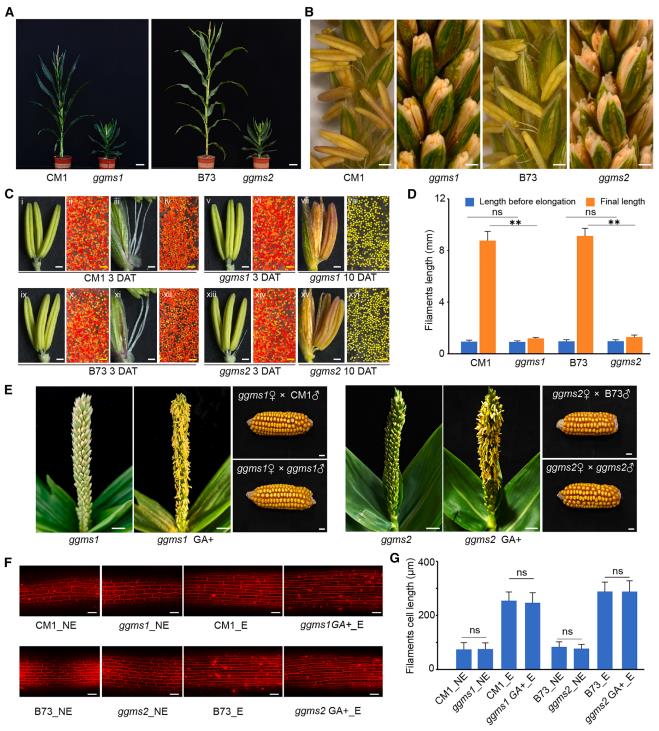
Figure 1. Gibberellin-sensitive genic male sterility selectively blocks filament elongation in maize. (Xu, et al., 2026)
Implications for Seed Production
In practice, a tunable male-sterility system could change the logistics of hybrid seed production. Weak ggms3/4 alleles maintained plant height and ear yield comparable to the tested control while blocking anther exsertion. Strong ggms1 required GA treatment during vegetative growth; in a small field trial, GA treatment before tassel emergence enabled hybrid seed production without detasseling. GA application after tasseling can restore male fertility for self-propagation, whereas withholding that treatment maintains male sterility for hybrid seed production. Allele choice and treatment timing are therefore central to the production scheme. Coupled with Zea mays transformation and marker-assisted breeding, the locus is a candidate for introduction into elite inbreds, followed by evaluation of fertility control and agronomic performance.
Translating the allele from a discovery line into commercial hybrids will still require care. The three-threshold balance depends on genetic background and environment, so the same lesion could behave differently in an elite inbred than in the mutant's original line, and the timing of any gibberellin rescue must match the flowering window. There is also the question of how completely sterility is maintained across additional field stresses, beyond the photoperiod, temperature, and location tests already reported, and whether stacking the ggms allele with other traits introduces interactions that blunt its effect. None of these hurdles is unusual for a sterility system, but they underline the need to extend the reported pilot seed-production trial and multi-location sterility observations to broader production environments. If it holds up, the gibberellin switch offers a notably cleaner alternative to the detasseling crews hybrid maize still relies on, and its logic—identify a developmental process with a high sensitivity to hormone reduction—could guide searches for uncoupling alleles in other outcrossing crops.
Conclusion
By linking male sterility to a single, hormone-sensitive step in gibberellin biosynthesis, this work turns an otherwise blunt trait into a precise, adjustable switch. The three-threshold framework explains how weak alleles impair filament elongation while maintaining vegetative growth and offers a basis for testing other uncoupling alleles. For hybrid maize, it provides experimental support for a controllable seed-production strategy; costs and performance at commercial scale remain to be evaluated. If the trait proves stable across environments, it could relieve the detasseling burden that still defines much of the hybrid seed supply chain.
Related Services & Products
Reference
- Xu, R., et al. (2026). A three-threshold gibberellin model defines tunable uncoupling of male fertility and growth to facilitate maize hybrid seed production. Plant Communications. DOI: 10.1016/j.xplc.2026.102117.
For research or industrial raw materials, not for personal medical use!
 IMPORTANT NOTICE: BEWARE OF IMPERSONATION