Potato ranks as the world's fourth most important food crop, yet its genetic improvement faces persistent bottlenecks. Conventional breeding is slowed by the complexity of the tetraploid genome, and genetic transformation of commercial cultivars remains notoriously inefficient. Before any transgenic or genome-edited line reaches the greenhouse, researchers must first verify that their DNA constructs and editing tools actually work. A new study published in the Journal of Genetic Engineering and Biotechnology introduces an elegantly simple solution: a non-sterile, Rhizobium rhizogenes-mediated hairy root transformation system powered by the RUBY visual reporter, achieving up to 100% transformation efficiency in the commercially important cultivar Atlantic and confirming CRISPR/Cas9 editing at a rate of 96%.
Genetic engineering offers a powerful alternative to conventional breeding for potato, especially as climate change intensifies both biotic and abiotic stresses. However, the utility of any gene construct or CRISPR system hinges on one prerequisite: confirming that it is active in the target species. For potato, particularly commercial cultivars, this validation step has been a persistent obstacle due to low Agrobacterium tumefaciens-mediated transformation efficiencies and the labor-intensive tissue culture workflows they demand.
Rhizobium rhizogenes-mediated hairy root transformation has emerged as a popular workaround for rapidly evaluating gene constructs and genome editing activity across many plant species. The challenge, however, lies in the reporter gene. Traditional options each carry practical drawbacks:
RUBY is a recently developed color-based reporter that encodes three key enzymes in the betalain biosynthesis pathway: CYP76AD1, L-DOPA 4,5-dioxygenase, and a glycosyltransferase. When RUBY is expressed, the host tissue accumulates a vivid red pigment that is visible to the naked eye. No chemical treatment, no microscopy, and no specialized instrumentation are needed to identify transgenic tissue. This property makes RUBY an ideal reporter for a streamlined, non-sterile transformation pipeline.
The researchers constructed a dual-purpose vector, pFGC-Cas9-RUBY-GW, by inserting a CaMV35S::RUBY::HSPter cassette into the backbone of pFGC-Cas9-GW. For genome editing validation, a single-guide RNA was designed using the CCTop online tool to target a 23-nucleotide sequence within exon 1 of the StDL1 gene, which encodes an R2R3 MYB transcription factor. The gRNA was cloned into the binary vector via Gateway LR Clonase recombination, and the final construct, pFGC-Cas9-RUBY-StDL1, was verified by Sanger sequencing before electroporation into R. rhizogenes strain K599.
This is where the method truly distinguishes itself. The entire procedure is performed outside of a sterile laminar flow hood:
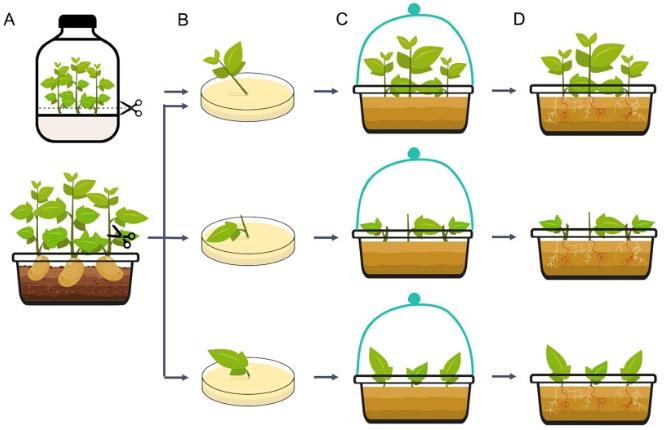
Figure 1. A procedure for potato hairy root transformation using R. rhizobium-mediated method. (Ly, et al. 2026)
Transgenic hairy roots are identified simply by their red pigmentation. The entire workflow requires no tissue culture facility, no sterile bench, and minimal technical training.
Three potato cultivars were compared for hairy root induction and transformation performance. All three achieved a 100% hairy root induction rate, but transformation efficiency and root vigor differed markedly:
Atlantic outperformed the other cultivars across all measured parameters and was selected for all subsequent experiments.
The age of the source plant proved to be a critical variable:
Although three-week-old shoots produced marginally more roots per explant, two- and three-week-old shoots both yielded composite plants with faster growth, healthier leaves, and more robust root systems. Taking both transformation performance and time efficiency into account, two-week-old seedlings were identified as the optimal starting material.
Beyond tuber sprouts, the researchers tested stem node and leaf explants for hairy root transformation:
While neither stem nodes nor leaves matched the raw efficiency of tuber sprouts, both proved fully functional as explant sources, giving researchers flexibility in experimental design.
The ultimate test of this system was whether it could reliably confirm genome editing activity. Twenty-six independent RUBY-positive hairy root lines were analyzed for mutations at the StDL1 target site:
These results demonstrate that the in vivo hairy root system can serve as an effective and rapid platform for validating CRISPR/Cas construct activity before committing to the more resource-intensive process of whole-plant regeneration.
This in vivo system offers several practical advantages that lower the barrier to entry for potato genetic engineering:
With the potato genome sequenced but the majority of genes still functionally unannotated, this system has the potential to accelerate functional genomics research significantly. It is also likely transferable to other Solanaceae crops.
It is worth noting that while this hairy root system serves as a rapid front-end validation platform, each transgenic hairy root line represents an independent and stable transformant event. In many plant species, such roots are capable of regenerating into whole transgenic plants, suggesting that this approach may also streamline the path toward stable, genome-edited potato lines.
Get Latest Lifeasible News and Updates Directly to Your Inbox


A Supergene for Mirror-Image Flowers in Wachendorfia
July 31, 2026
Sentinel Plants Quantify Bioavailable Nitrate
July 24, 2026