No Single DNA Repair Protein Is Essential for Agrobacterium T-DNA Integration in Arabidopsis
The Challenge of T-DNA Integration
Agrobacterium-mediated transformation remains the most widely used method for moving genes into plants, and it underpins much of the work we support through our plant genetic transformation service. The bacterium transfers a segment of DNA, the T-DNA, across the plant cell wall and into the nucleus, where it must become part of the host chromosome for a stable transgenic plant to arise. How exactly that integration step happens has been debated for decades. A popular model holds that the plant cell repairs the broken DNA ends created during insertion, and that the canonical nonhomologous end-joining (NHEJ) machinery does the repair. If that were true, mutating NHEJ genes should block transformation. Yet the experimental record has been contradictory, with different studies reaching opposite conclusions. A new study in New Phytologist reconciles these discrepancies and arrives at a striking conclusion: no individual DNA repair protein is absolutely required for T-DNA to land in the plant genome.
Why DNA Repair Proteins Became Suspects
T-DNA enters the cell as a single strand and must be converted into a double strand before it can ligate into a break in the plant chromosome. Because double-strand breaks are normally repaired by NHEJ enzymes such as Ku70, Ku80, DNA ligase IV, and XRCC4, it was natural to assume that these proteins would also handle T-DNA integration. Earlier reports linked loss of Ku80, ligase IV, or DNA polymerase theta (PolQ) to lower transformation frequencies, while others found no effect, and a few even reported higher transformation when NHEJ was impaired. Part of the confusion stems from the assays themselves. Many studies measured stable transformation through expression of a selectable marker, but T-DNA can integrate without the transgene being expressed, and expression can fail for reasons unrelated to integration. The authors therefore separated three distinct questions: transient expression, stable transformation, and actual T-DNA integration into the genome measured in the absence of selection.
Testing Single and Higher-Order Repair Mutants
The team characterized Arabidopsis thaliana mutants carrying defects in one, two, three, or four DNA repair and recombination pathways at once, including ku80 (C-NHEJ), xrcc1 (A-NHEJ), xpf (involved in A-NHEJ and homologous recombination), and xrcc2 (homologous recombination). They quantified transient and stable transformation with established root assays and then measured T-DNA copy number directly using droplet digital PCR, a method sensitive enough to detect a single integrated T-DNA among many plant genomes. Because multiple repair defects made plants grow poorly under normal light, the researchers also grew mutants under low light, which restored normal growth and separated the effect of DNA repair on integration from the general ill health of the plants.
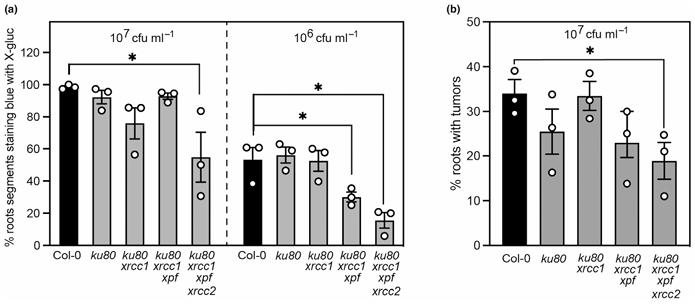
Figure 1. Transient and stable transformation of Arabidopsis DNA repair and recombination mutants. (Lee, et al. 2026)
T-DNA Integration Persists Without Key NHEJ Proteins
The central result is that T-DNA continued to integrate even when plants lacked up to four different repair and recombination pathways simultaneously. In the nonselective integration assay, mutant calli carried roughly the same low copy number of T-DNA per genome as wild-type plants. Stable transformation frequencies did drop as more pathways were disabled, particularly in higher-order mutants, but transformation was never eliminated. This supports the view that NHEJ proteins influence how much T-DNA integrates and how efficiently transgenic shoots appear, but they are not the only route. When repair is slowed, broken chromosome ends may persist longer, giving invading T-strands more opportunity to copy themselves into the genome, which would explain why impairing certain repair genes sometimes increases rather than decreases integration.
The PolQ and Polλ Complications
Two DNA polymerases added nuance. PolQ (polymerase theta) had been proposed as essential for integration, but the new work shows PolQ affects steps that precede integration as well: polQ mutants were deficient in transient transformation, meaning they struggle to convert the single-stranded T-strand into an expressible double strand. That explains why PolQ loss looks severe in selective assays yet leaves a substantial amount of integrated T-DNA behind. By contrast, mutants lacking DNA polymerase lambda (Polλ) showed altered transformation efficiency in both transient and stable transformation assays, suggesting Polλ may normally restrain T-DNA integration and strand conversion. The takeaway is that several enzymes touch the process, but none is individually indispensable, and some act at stages distinct from the final ligation event.
Implications for Plant Genetic Engineering
These findings matter for anyone designing transformation pipelines. They argue against searching for a single knockout that will cleanly block or boost integration, and instead point to redundancy: multiple, partly overlapping pathways can complete the job. For researchers interested in transgene-free genome editing, the work also clarifies why transient delivery of CRISPR reagents can succeed even when stable integration is undesirable, since transient expression does not require the final repair step. Understanding which proteins merely modulate efficiency versus which are truly required helps set realistic expectations when optimizing recalcitrant species. Our gene knockout services and broader gene editing technology offerings build on exactly this kind of mechanistic insight to deliver edited plants without relying on a single pathway.
Measuring Integration Without the Bias of Selection
A methodological lesson travels with the biological one. Most transformation scores depend on a selectable marker being expressed, which quietly conflates two separate events: integration of T-DNA into the chromosome and expression of the transgene carried on it. The authors avoided that trap by letting calli proliferate without selection for two months and then counting T-DNA copies with droplet digital PCR, a quantitative method that detects integrated DNA even when the transgene is silent, methylated, or otherwise invisible to a reporter assay. That distinction matters because a plant can harbor integrated T-DNA yet fail to register as transgenic, which exaggerates apparent gaps between genotypes. For anyone comparing host susceptibility or troubleshooting a stubborn protocol, the practical rule is to match the assay to the question: selective markers suffice for routine transgenic production, but integration-level measurement is the honest yardstick when the goal is understanding the mechanism itself.
A Lesson for Recalcitrant Crops
Although the experiments use Arabidopsis, the logic reaches crops that transform poorly. If integration is redundantly supported by several repair routes, then weak transformation in a difficult crop is unlikely to stem from a single missing enzyme and far more likely reflects downstream regeneration or selection bottlenecks. Effort is therefore better spent on developmental regulators that drive shoot formation or on markers that suppress false positives than on forcing one repair pathway to do all the work. This perspective shapes how we scope CRISPR-based genome modification projects: we treat transformation failure as a systems problem rather than a single-gene defect, and we combine delivery, regeneration, and editing optimizations instead of betting the outcome on one lever. The redundancy uncovered here is reassuring, because it means the integration step is unlikely to be the wall that stops a crop from entering the editing age.
Conclusion
The study settles a long-running controversy by showing that T-DNA integration into the Arabidopsis genome is robust to the loss of individual and even multiple DNA repair routes. No known NHEJ or recombination protein is essential, although collectively they shape efficiency and transgene expression. For practitioners using Arabidopsis thaliana transformation or extending CRISPR-based genome editing to crops, the message is encouraging: the integration step is forgiving, and improvements in transformation are more likely to come from managing regeneration and selection than from forcing a single repair pathway. This redundancy is good news for the reliability of plant genetic engineering across diverse species and genotypes.
Related Services & Products
Reference
- Lee, L.Y., et al. (2026). Arabidopsis DNA repair mutants can integrate Agrobacterium T-DNA into the plant genome. New Phytologist. DOI: 10.1111/nph.71308.
For research or industrial raw materials, not for personal medical use!
 IMPORTANT NOTICE: BEWARE OF IMPERSONATION