Global agriculture is being squeezed by a tightening knot of stresses. On the abiotic side, shifting weather patterns intensify drought, extreme temperatures, flooding, and soil salinity, while on the biotic side, novel pest outbreaks and disease epidemics keep appearing in places that rarely saw them before. Together these pressures threaten the yield stability that feeding a growing population depends on, and they make the search for climate-resilient crops an urgent priority rather than an academic luxury. One of the oldest and most powerful answers to this challenge is written directly into plant genomes: polyploidy, the condition of carrying three or more complete sets of chromosomes. Occurring when mitosis or meiosis goes wrong and the genome doubles, polyploidy comes in two broad flavors. Autopolyploidy arises when the extra chromosome sets come from a single species, whereas allopolyploidy follows the hybridization of two or more distinct species combined with genome doubling. Many of the crops we depend on most are recent polyploids, and the pattern is striking: tetraploid (4×) cotton carries four chromosome sets, hexaploid (6×) wheat six, and octoploid (8×) strawberry eight. Across wild and cultivated plants alike, polyploids frequently outperform their diploid relatives when the environment turns hostile, showing enhanced tolerance to both abiotic and biotic challenges. Understanding why has become a central question for modern plant breeding, and the answer turns out to lie in the genomic and epigenomic upheaval that follows genome doubling.
When a whole-genome duplication happens, the new polyploid does not sit still. Over evolutionary time it undergoes diploidization, a gradual return toward a diploid-like state driven by the loss of duplicated sequences, a process called fractionation. What makes this interesting is that the losses are not random. Genes and their associated regulatory elements are shed asymmetrically between the subgenomes inherited from the different diploid progenitors, so one subgenome retains more than the other. On top of this erosion, homoeologous exchanges (HEs), which are recombination events between chromosomes contributed by the different parents, shuffle the dosage of parental gene copies and can create entirely new gene structures. Meanwhile, ongoing tandem and segmental duplications keep injecting fresh copies into the genome. The practical consequence is that polyploid populations carry a living library of gene-content variation: differences in presence, absence, and copy number of specific genes. These differences matter because gene dosage directly reshapes metabolic flux, and because the extra copies of regulatory genes such as transcription factors can reset the timing or magnitude of whole developmental programs. The arrival of pangenomics has made this variation visible at scale, moving beyond single reference genomes to capture the full gene repertoire of a species as a graph. In many plant pangenomes, more than half of all genes turn out to be accessory, present in only some individuals, and a substantial share of those accessory genes contribute to abiotic stress tolerance and disease resistance. Comparative whole-genome sequencing now lets researchers pinpoint presence-absence variation and copy-number variation across diverse accessions, and coupling those patterns with expression data and gene function analysis helps connect specific gene-content changes to superior stress phenotypes.
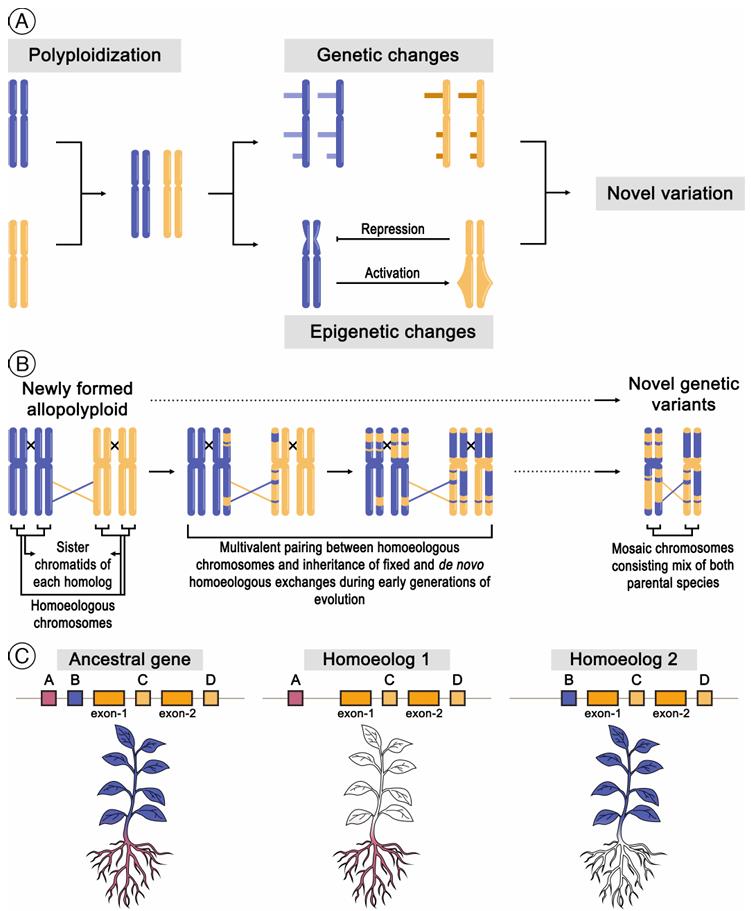
Figure 1. Polyploidization triggers a cascade of genetic and epigenetic changes that together generate novel, stress-relevant phenotypes absent from either diploid progenitor. (Edger, et al. 2026)
If gene content is the hardware, the cis-regulatory elements (CREs) are the switches. These noncoding sequences, bound by transcription factors and other regulatory proteins, decide when, where, and how strongly a gene is expressed. Promoters sit just upstream of a gene and recruit RNA polymerase; enhancers can act from a distance, above, below, or inside introns, to amplify expression; silencers do the opposite. Variation in these elements is a fundamental driver of plant phenotypic diversity, and it often acts faster and more dramatically than changes to the protein-coding sequence itself. A single nucleotide polymorphism in a CRE can alter transcription-factor binding affinity and quietly rewire expression; the complete presence-absence of a CRE can mean the difference between a gene that is silent and one that is robustly active; and larger structural changes, including the translocation of a CRE to a new genomic neighborhood, can place a gene under entirely new regulatory control. Transposable elements are frequent agents of this last kind of change, because they can capture existing CREs and deposit them next to different genes. A vivid example is Crassulacean acid metabolism (CAM) photosynthesis in pineapple, which was built by reconfiguring preexisting C3 pathways and recruiting CREs originally tied to circadian-clock genes to key photosynthetic genes. Similar TE-driven positional variation has been documented in Arabidopsis, where it contributes to novel expression patterns in genes linked to abiotic stress tolerance. Because CRE divergence so often precedes observable trait change, careful plant trait identification is what ultimately links a regulatory variant to a resilience phenotype in the field.
Lying on top of the DNA sequence is an additional regulatory layer that does not change the letters of the genome but profoundly changes how they are read. DNA methylation adds a methyl group, typically at cytosines, and acts as a molecular switch that often represses transcription. Histone modifications, such as acetylation and methylation of histone tails, reshape chromatin between an open, transcriptionally active state and a closed, silent one, while chromatin-remodeling enzymes like histone acetyltransferases and deacetylases loosen or compact the structure. Noncoding RNAs add yet another dimension of control. Small interfering RNAs, processed through the plant-specific dicer pathway, orchestrate RNA-directed DNA methylation that keeps transposable elements silent; when their abundance shifts in a newly formed polyploid, entrenched elements can be released and drive further genomic change. MicroRNAs and long noncoding RNAs fine-tune expression by targeting messenger RNAs for degradation or by altering chromatin structure. The differential activity of these elements between subgenomes is a major contributor to subgenome dominance, the phenomenon in which one parental genome exerts a disproportionate influence on the polyploid's overall gene expression. This layered, cis- and trans-acting regulatory system is what gives polyploids their unusual capacity to adapt, and it is also why plant resistance identification and the measurement of relevant metabolites in plants under stress are essential partners to genomic discovery when the goal is resilient cultivars.
Deciphering which CREs matter under stress has been transformed by a generation of open-chromatin and mapping methods. Active CREs sit in nucleosome-depleted, nuclease-hypersensitive regions, so techniques such as ATAC-seq, DNase-seq, and MH-seq can locate them genome-wide and reveal which sites become more or less accessible when a plant is stressed. The newest wave goes cellular: single-cell ATAC-seq can be paired with single-cell RNA-seq to produce cell-type-specific regulatory maps that far surpass organ-level averages. Chromatin immunoprecipitation sequencing (ChIP-seq) pinpoints exactly where a transcription factor or histone mark binds, and reporter assays, in which a candidate CRE is fused to a reporter gene and introduced into plants, confirm its function in vivo. Increasingly, putative CREs are also deleted or rewritten with CRISPR to test causality directly. Computational approaches keep pace with the wet lab. Bayesian graphical models and statistical learning algorithms discover overrepresented transcription-factor motifs among co-expressed stress genes, and machine-learning frameworks, from support vector machines to deep neural networks built on convolutional and transformer architectures, now predict base-resolution chromatin accessibility and transcription-factor binding, sometimes across species. The most recent foundation models even permit in silico perturbation of a CRE or binding site to forecast its downstream effect on expression. Together these tools convert raw sequence into predictive, engineerable regulatory grammar, and they integrate naturally with transcriptomics to connect DNA-level change to coordinated gene expression.
The payoff of all this mechanistic insight is a set of far more precise crop-improvement strategies. Traditional polyploid breeding often relied on slow, phenotype-driven selection, and many communities even retreated to diploid progenitors to keep marker work simple and cheap. That is changing. Marker-assisted selection lets breeders track desirable alleles directly, and genomic selection uses genome-wide marker data to predict breeding value, so resilient parents and progeny can be chosen before a single field trial. Because duplicated genes give polyploids a built-in reservoir of dosage variation, breeders can now select not only for particular gene and CRE variants but also for the total copy number of a gene and the relative contribution of each parental subgenome, tuning the strength and duration of a stress response. Genome editing raises the ceiling further. CRISPR and related technologies can rewrite a CRE to alter transcription-factor binding and fine-tune a pathway, or they can change gene copy number by adding a beneficial copy or excising a redundant or deleterious one; in maize, for example, targeted mutation in a single coding region has shifted water-use efficiency, a trait central to drought tolerance. The same tools that dissect regulatory logic in model systems are ready for deployment through CRISPR-Cas9 genome editing and standard plant genetic transformation, and they pair well with broader goals such as crop nutrient improvement to build next-generation, climate-resilient varieties.
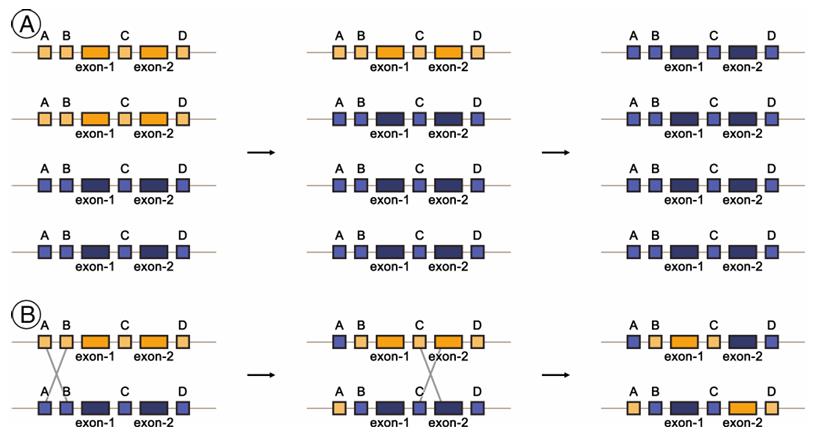
Figure 2. Homoeologous exchanges between progenitor chromosomes reshape the dosage and structure of homoeologous genes, forging new combinations that can fine-tune stress responses. (Edger, et al. 2026)
For all the progress, the field is far from finished. Five frontiers stand out. First, dissecting regulatory complexes: we still struggle to know which CREs cooperate to control one gene, and the co-loss of duplicates in polyploids offers a natural experiment for inferring physical and functional interactions. Second, mapping the three-dimensional regulatory architecture of polyploids, including long-distance enhancer-target contacts across subgenomes, especially when integrated with single-cell data. Third, integrating CRE variation with co-expression networks to surface master regulators and clarify how DNA-level shifts translate into coordinated phenotypes. Fourth, quantifying how often transposable-element insertions actually move CREs to new genes and generate stress-adaptive traits. Fifth, and perhaps most important for agriculture, predicting phenotypes from pangenome-level variation, so that catalogs of accessory genes and CRE differences become actionable breeding strategies rather than descriptive lists. Closing these gaps is what will let us move from admiring polyploid resilience to engineering it on demand, turning a venerable evolutionary accident into a deliberate tool for global food security.
Get Latest Lifeasible News and Updates Directly to Your Inbox


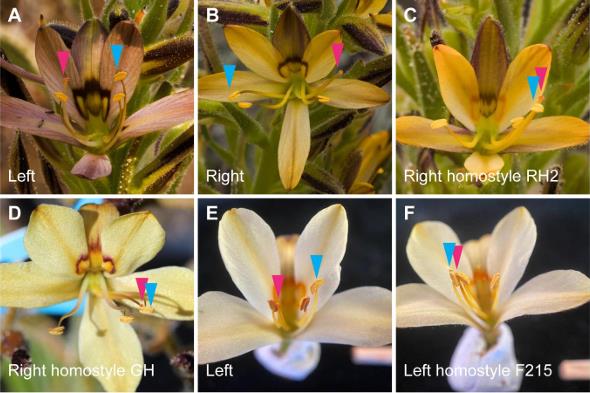
A Supergene for Mirror-Image Flowers in Wachendorfia
July 31, 2026
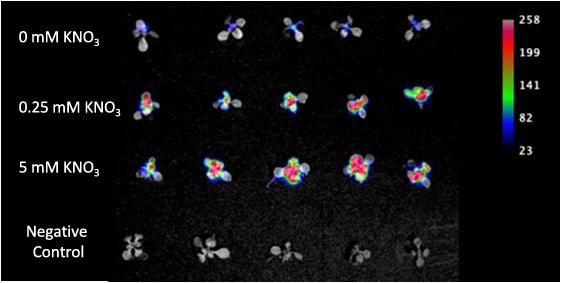
Sentinel Plants Quantify Bioavailable Nitrate
July 24, 2026